Phylum Chordata
Characteristics
- Presence of notochord (internal supporting rod) at some stage in life
- Pharyngeal gill slits
- Post-anal tail
- Segmented muscles
- Dorsal hollow nerve cord
|
|
Stem Chordates — Extinct Groups
Characteristics
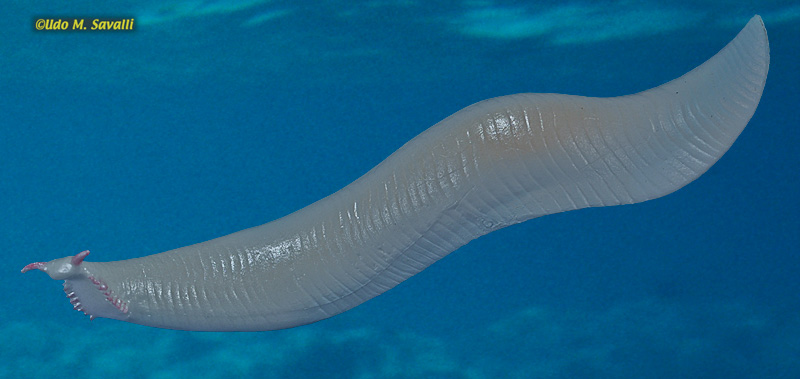
- Pikaia is superficially similar to Cephalochordates
- Note segmented muscles, well-developed caudal fin
- Sensory tentacles
- Formerly thought to be a cephalochordate, Pikaia now thought to be a stem-chordate
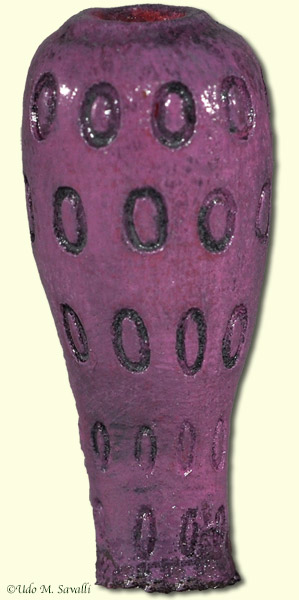
- Ausia is usually interpreted as a tunicate (but could be a sponge or coral)
- If so, it would be the only chordate fossil known from the Ediacaran
- It stood about 5 cm tall
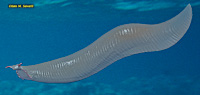
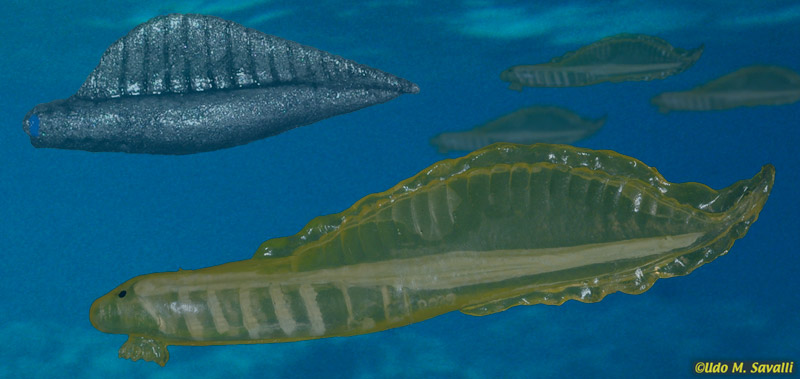
Pikaia gracilens model; Cambrian (Burgess Shale)
|
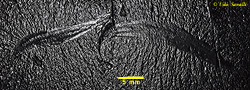
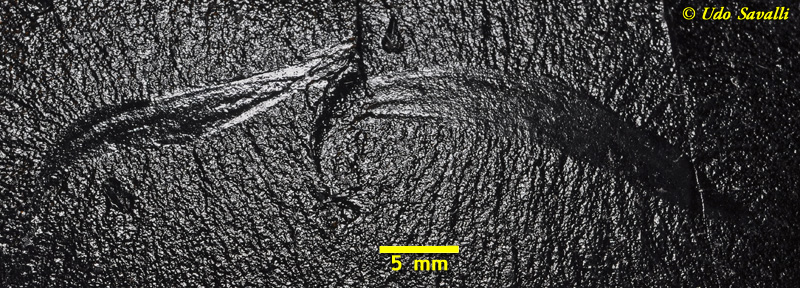
Pikaia gracilens fossil cast; Cambrian Period, 505 mya; Burgess Shale, BC, Canada
|
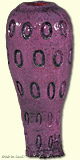
Model of Ausia fenestrata, a possible early tunicate; Ediacaran Period, 570-553 Ma; Namibia
|
|
|
Possible Chordates — Vetulicolia
Characteristics
- Known only from the Cambrian Period
- Relationships uncertain: may be stem-tunicates, basal chordates, non-chordate deuterostomes or even arthropod relatives
- Large bulbous anterior with mouth, possible gill openings
- Posterior tail with segmented muscles?
|
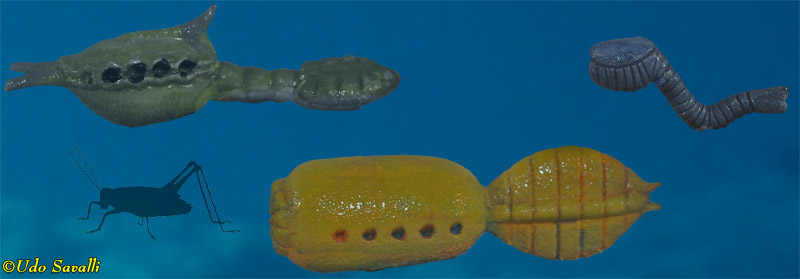
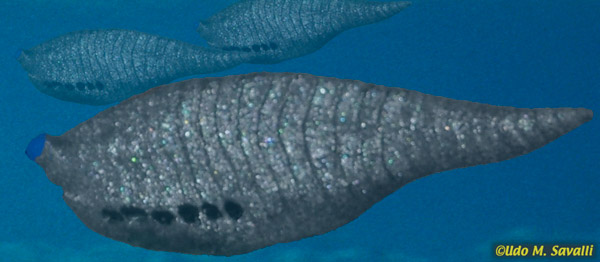
Models of three vetulicolians, from left to right: Vetulicola, Xidazoon, and Skeemella (Skeemella is from the Wheeler Shale of Utah [middle Cambrian], while the other 2 are from the Cheng Jiang fauna of China [early Cambrian]). Cricket for scale (2cm long without legs)
|
|
Subphylum Cephalochordata — Lancelets
Characteristics
- Elongate, laterally flattened, fish-like animals
- Tail and notochord persist throughout life
- Presence of tail (caudal) fin
- Notochord extends anteriorly past nerve cord
- Muscles segmented into myomeres
- Burrow in marine sediments
|

Lancelet (aka Amphioxus), Branchiostoma lanceolatum, preserved specimen
|

Lancelet (aka Amphioxus), Branchiostoma lanceolatum, stained whole mount
See also labeled photo.
|
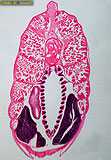
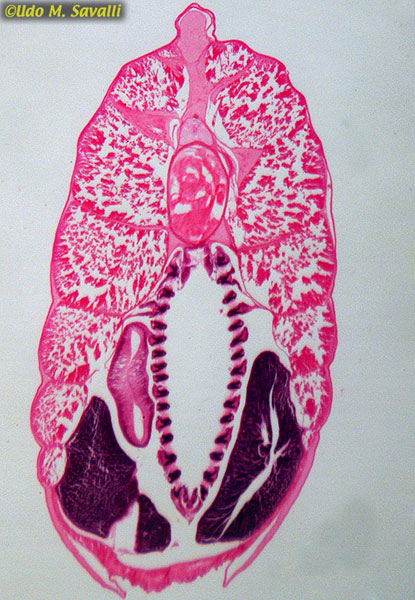
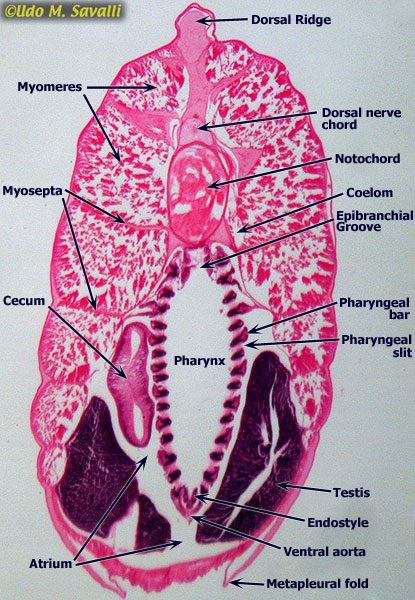
Lancelet (aka Amphioxus), Branchiostoma lanceolatum, stained cross section from mid-pharynx
See also labeled photo.
|
|
Subphylum Urochordata — Tunicates
Characteristics
- Notochord, dorsal nerve cord, and tail only present in larval stage in most
- Adults usually soft-bodied sac-like, sessile filter feeders
- Have 2 prominent openings: siphons
- A few are pelagic either with (larvaceans) or without tail
|
|
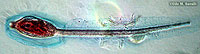
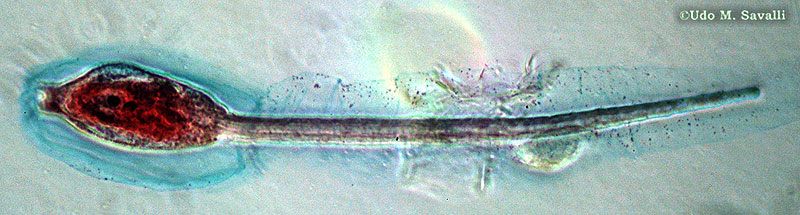
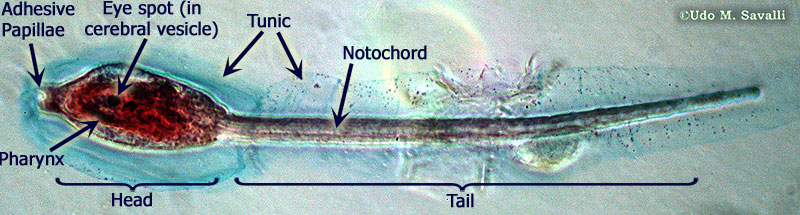
Ascidian "Tadpole" Larva, stained whole mount
See also labeled photo.
|
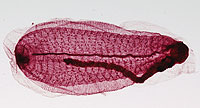
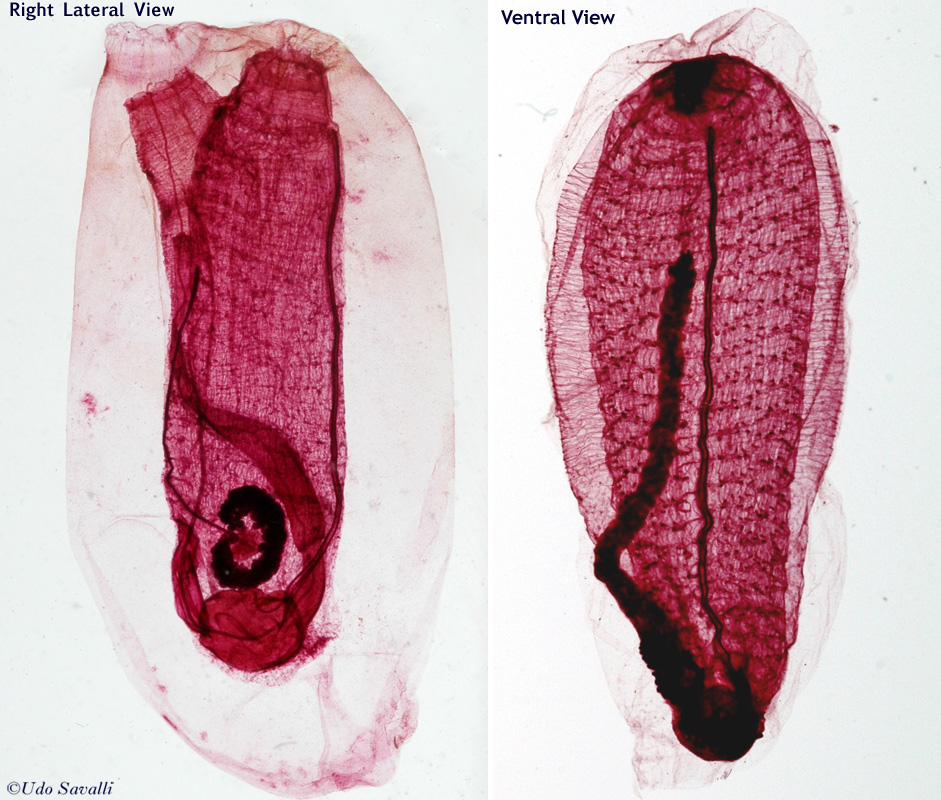
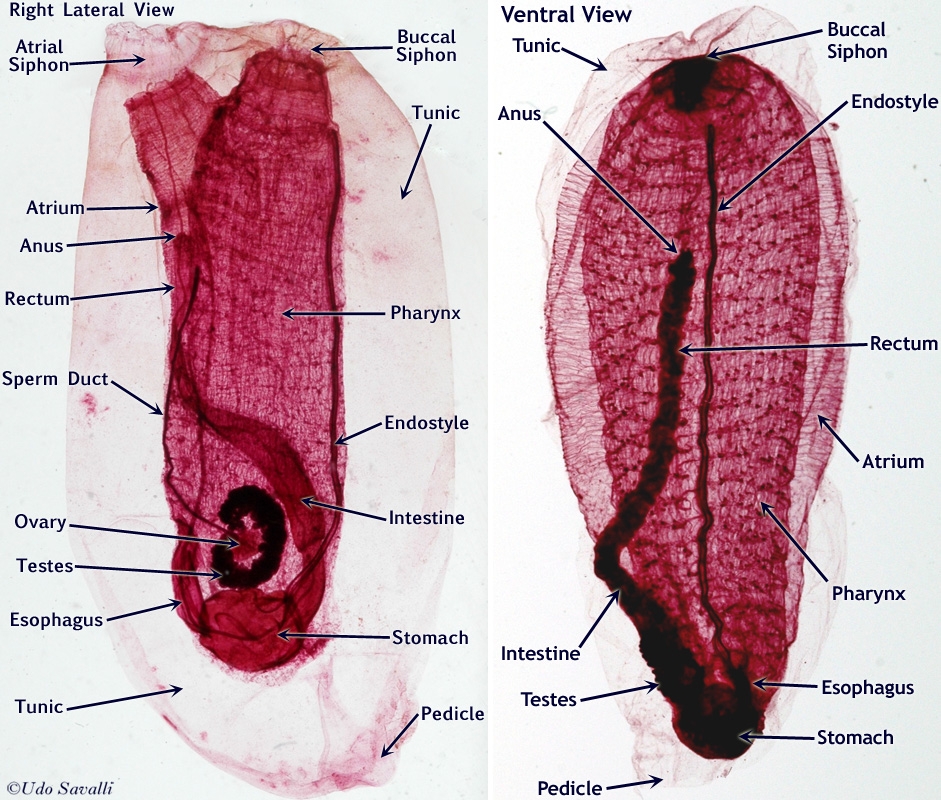
Mangrove Tunicate, Ecteinascidia sp., stained whole mount.
See also labeled photo (2 views shown)
|
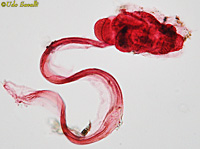
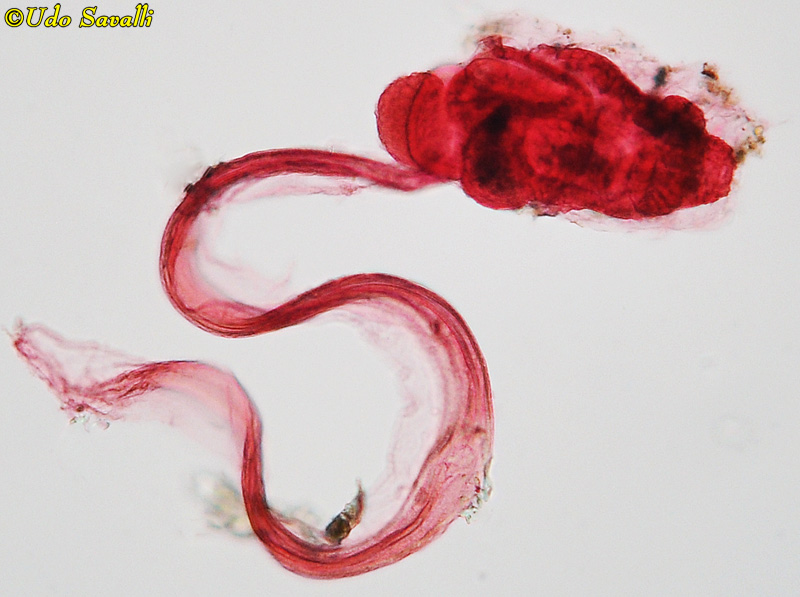
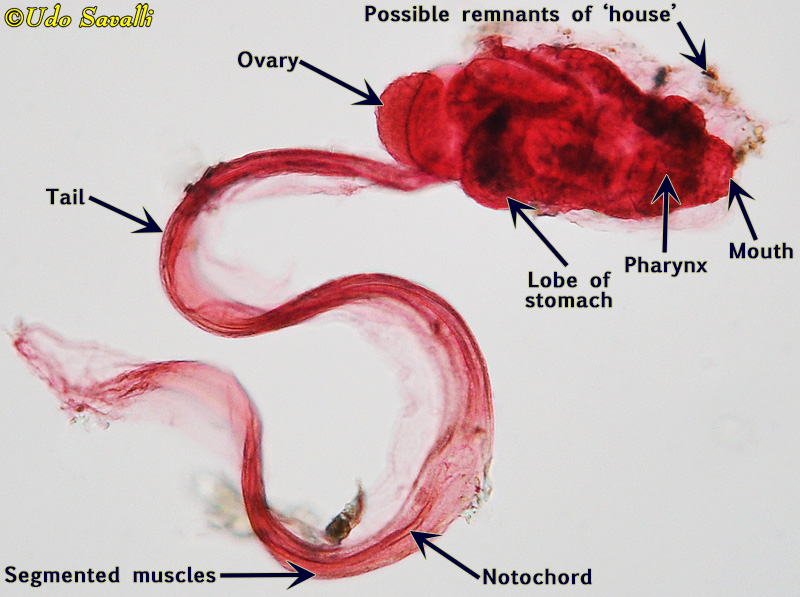
Larvacean, Oikopleura sp.?, stained whole mount.
See also labeled photo
|
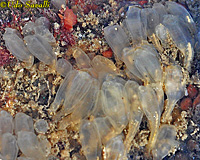
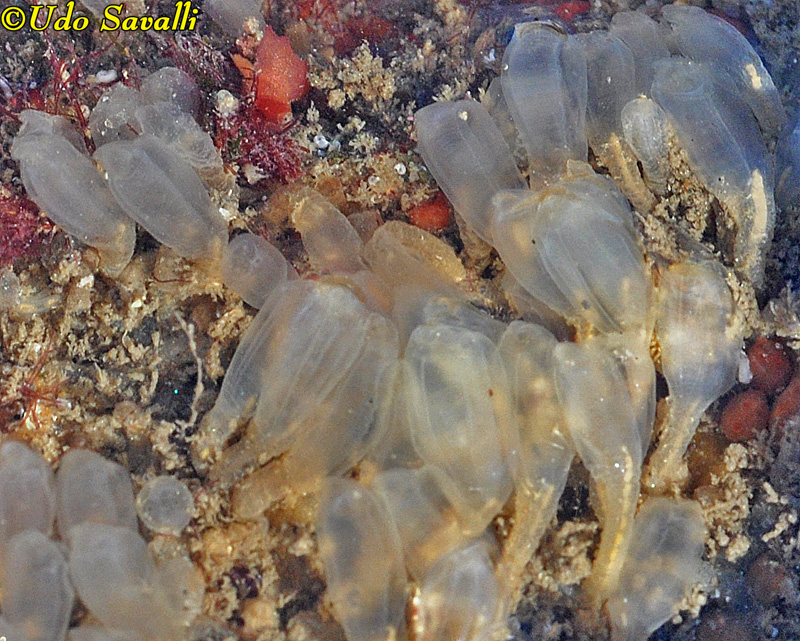
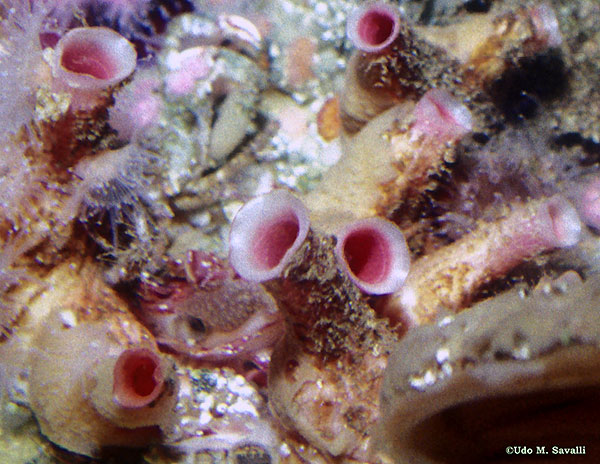
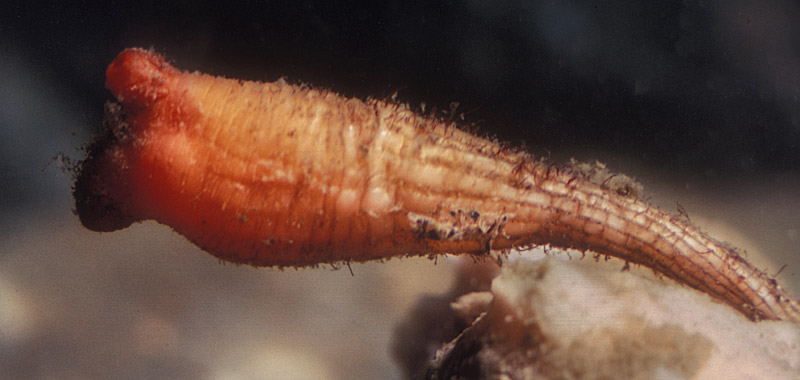
Club-shaped Ascidians, Euherdmania claviformis; La Jolla, CA.
|
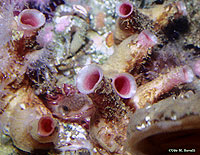
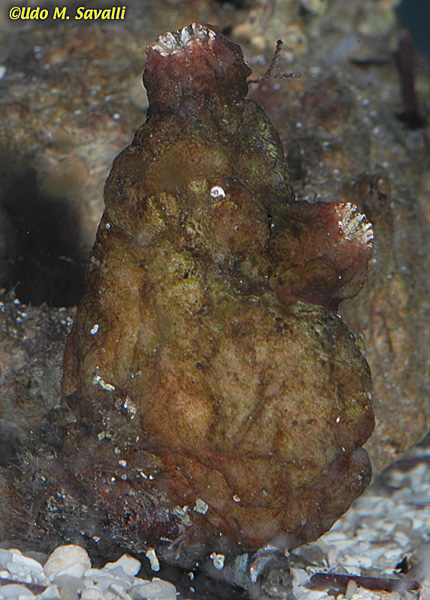
Tunicate, possibly Pyura sp.
|
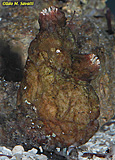
Sea Peach, Halocynthia aurantium
|
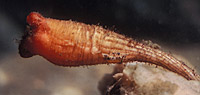
Stalked Sea Squirt, Styela clava
|
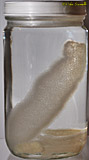
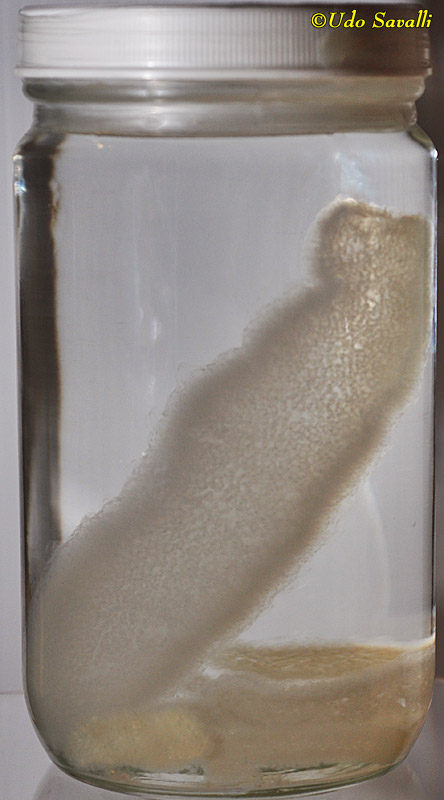
Pyrosome colony, Pyrosoma atlanticum, a colonial, pelagic tunicate (preserved specimen)
|

Social Tunicate, Metandrocarpa taylori; La Jolla, CA.
|
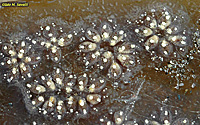
Pacific Star Tunicate, Botryllus sp.; a colonial form; La Jolla, CA.
|
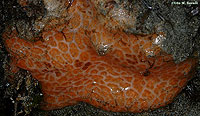
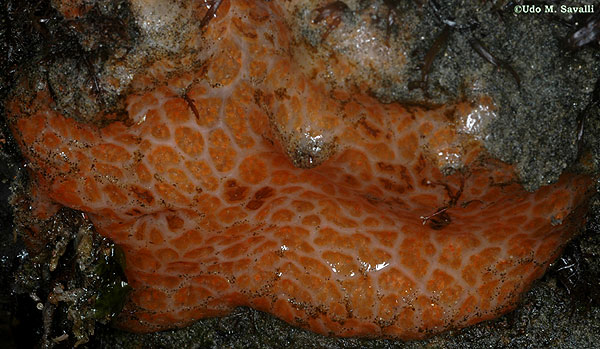
Sea Pork, Aplidium sp.; a colonial form: each small orange spot is a single individual; La Jolla, CA.
|
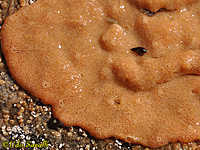
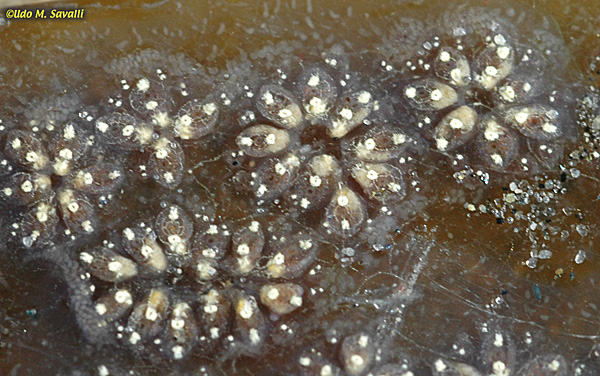
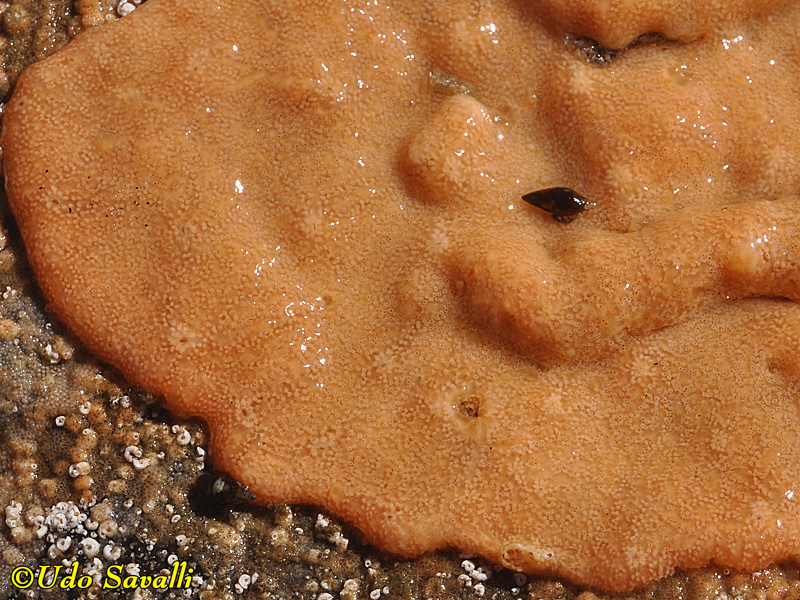
Colonial Tunicate, probably Didemnum sp.; La Jolla, CA.
|
|
Subphylum Vertebrata — Stem Vertebrates
Vertebrate Characteristics
- Brain enclosed in cartilagenous or bony cranium
- Fewer pharyngeal gill slits (used for respiration instead of feeding)
- Notorcord supplemented by or replaced with segmented vertebrae in most
- Larger, more complex brain and sense organs
- More complex visceral organs
- Includes fishes (jawless, cartilagenous, and bony), amphibians, reptiles, birds, and mammals
- Sometimes alternatively called the Craniata (with Vertebrata excluding the hagfishes)
|
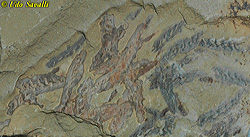
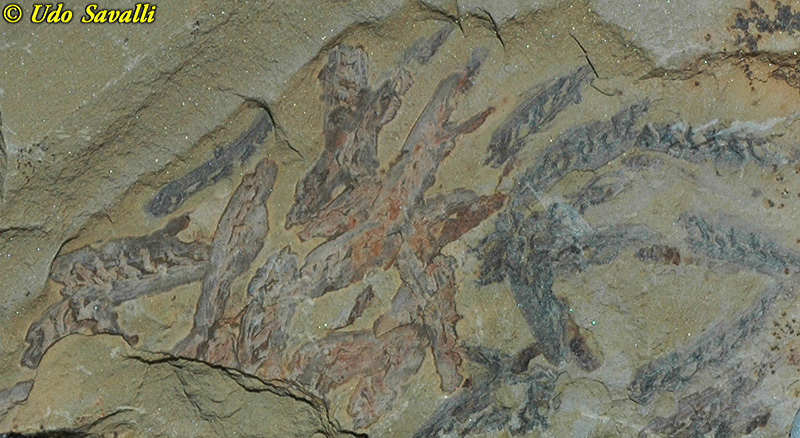
Haikouella lanceolata fossil; Early Cambrian, 520 mya (Yunnan, China); The fish-like shape and segmented muscles are visible in these poorly preserved fossils
|
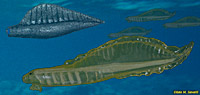
Models of the most basal craniates, Yunnanozoon lividum (upper left; ≈2cm long) and Haikouella lanceolata (lower right; ≈3 cm long); both Cambrian Period, China
|
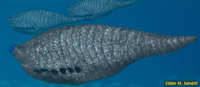
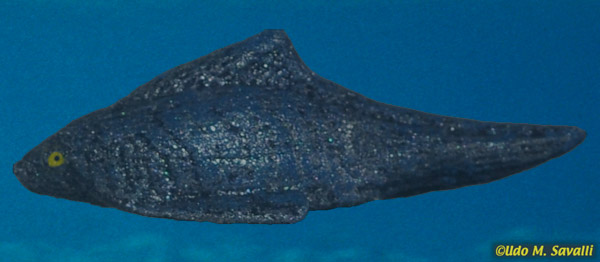
Metaspriggina walcotti model (Middle Cambrian Period, Burgess Shale). It was likely a stem vertebrate, probably more closely related to crown-group vertebrates than Yunnanozoon lividum and Haikouella lanceolata. About 10 cm long.
|
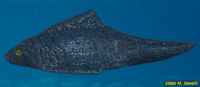
Myllokunmingia fengjiaoa model (Early Cambrian Period, China). It is generally considered a true vertebrate (craniate) since it has a cartilagenous cranium (skull). About 3 cm long.
|
|
|