Class Cyclostomata — Cyclostomes
Characteristics
- Elongated, eel-like but lacking lateral fins
- Round, jawless mouth
- Primarily supported by notochord; lack complete vertebrae
- No mineralized tissue (bone)
- Lack scales
|
Order Myxiniformes — Hagfishes
- Mouth surrounded by 6 tentacles
- 1-15 external gill openings
- Lack vertebrae: notochord only
- Single semicircular canal
- Numerous mucus glands
- Benthic (bottom) marine environments
|
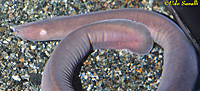
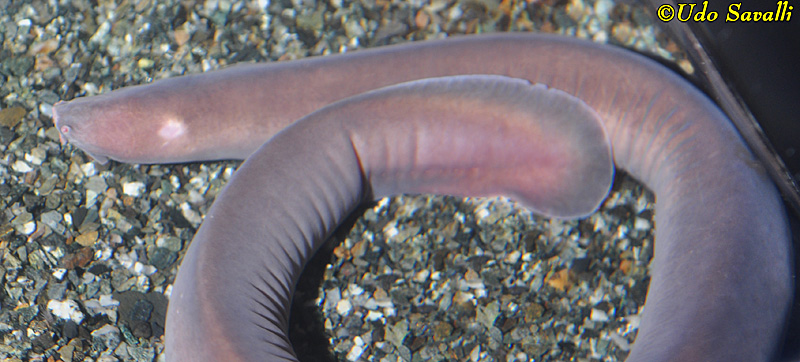
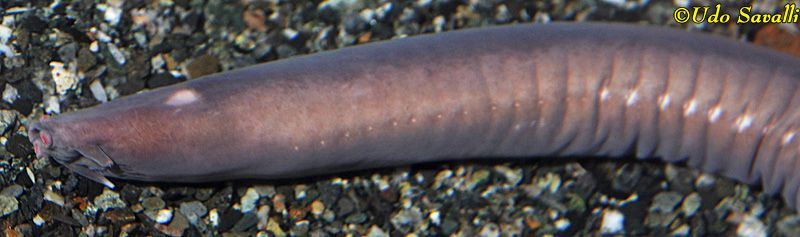
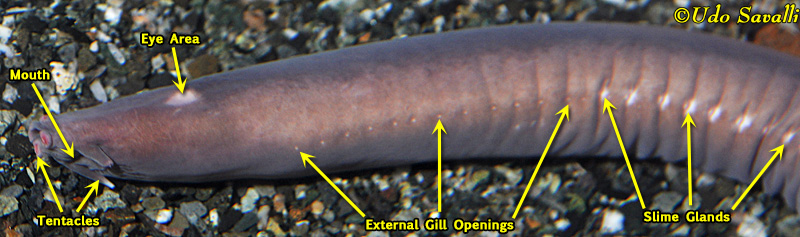
Pacific Hagfish, Eptatretus stoutii
|
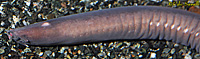
Pacific Hagfish, Eptatretus stoutii
See also labeled photo.
|
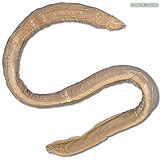
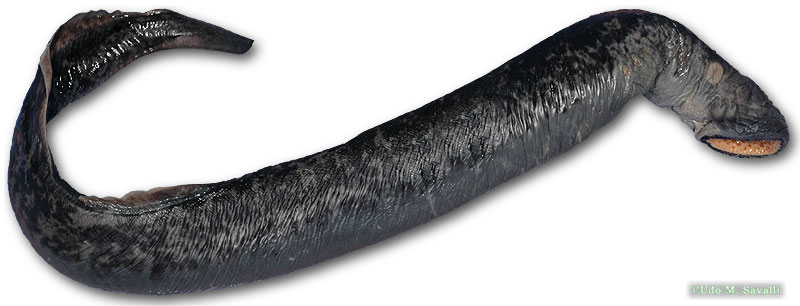
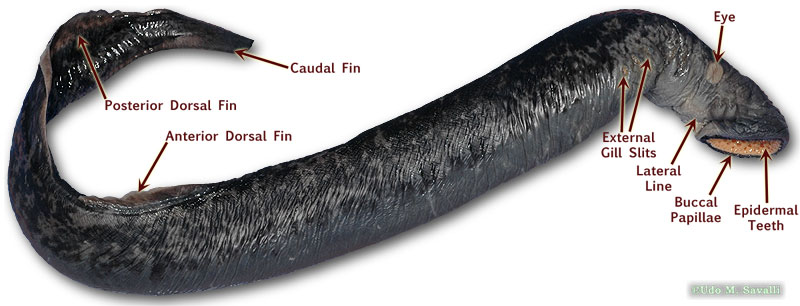
Hagfish, preserved specimen.
|
Order Petromyzontiformes — Lampreys
- Incomplete cartilagenous vertebrae along sides of notochord
- Dorsal fin
- 2 semicircular canals
- Adults are external parasites of other verterbrates
- Larvae are suspension feeders
See also Lamprey Anatomy page
|
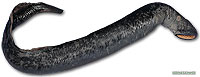
Lamprey, Petromyzon sp., preserved specimen
See also labeled photo.
|
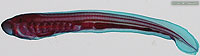
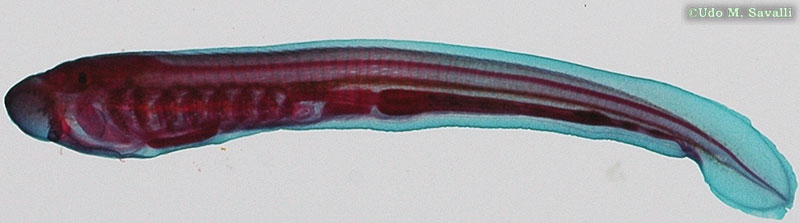
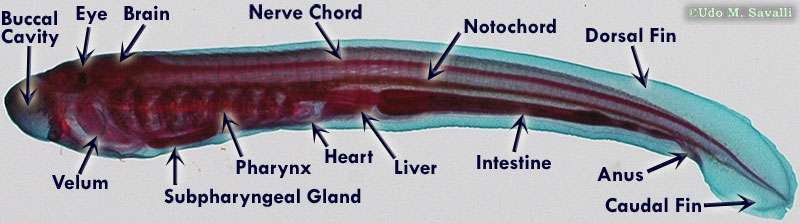
Larval Lamprey Petromyzon sp. ("Ammocoete"), stained slide.
See also labeled photo.
|
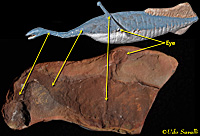
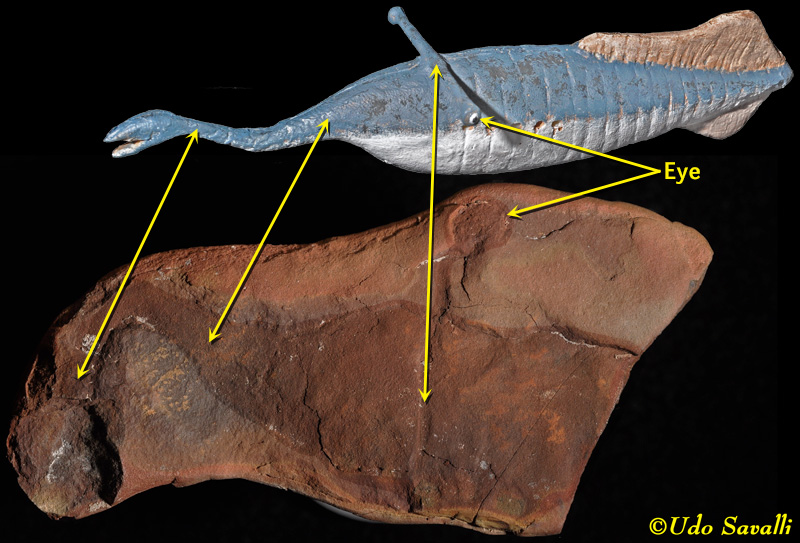
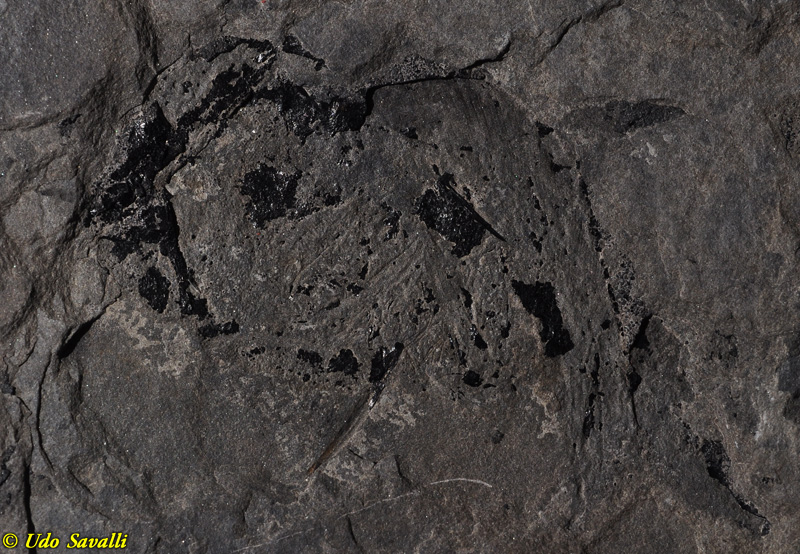
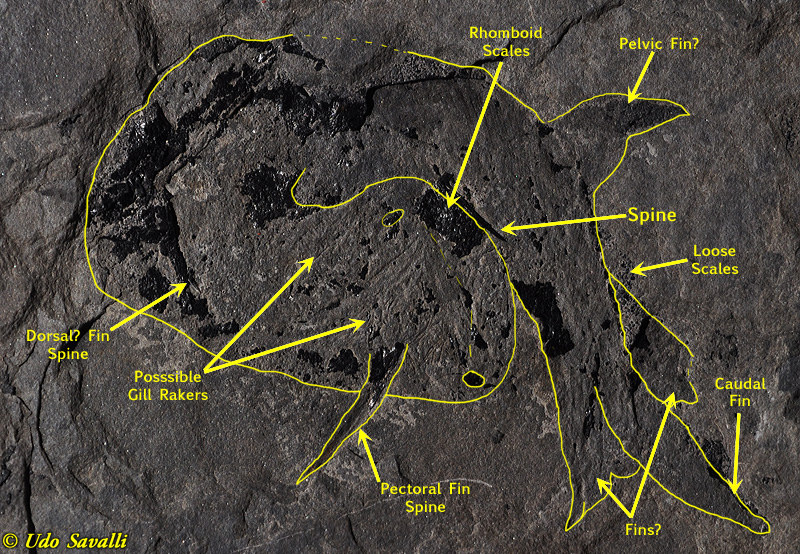
Tully Monster, Tullimonstrum gregarium, partial fossil and life model (Middle Pennsylvanian Epoch; IL)
|
|
Class Conodonta†
Characteristics
- Known predominantly from microfossils of complex feeding apparatus
- Often abundant indicator fossils in marine sediments
- Few soft-part fossils indicate elongated eel-like body, large eyes
- Probably more derived than either hagfish or lampreys
- Lived from late Cambrian to late Triassic (495-200 Ma)
|
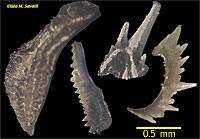
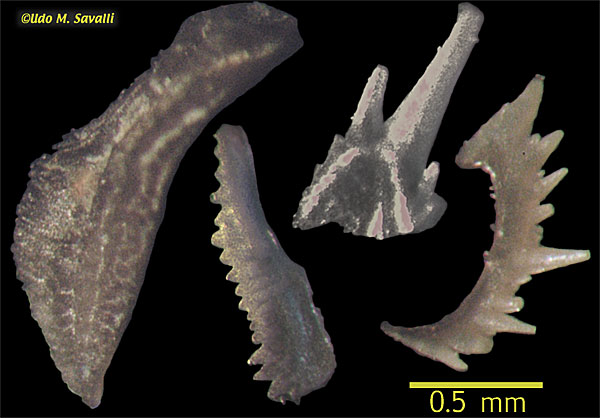
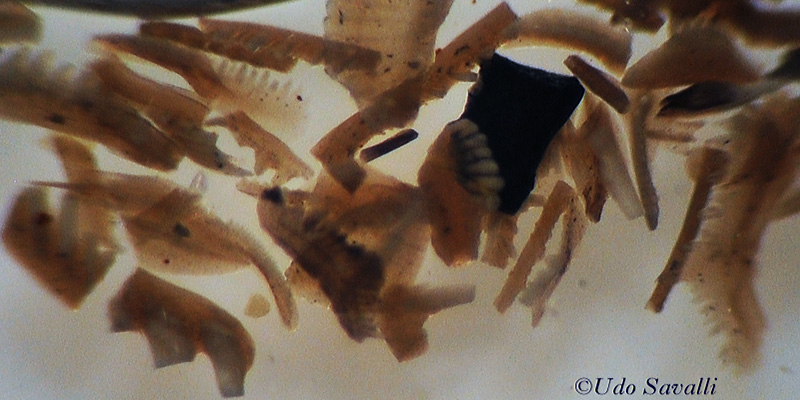
Conodont elements from Chappel Limestone, TX (Mississippian Period)
|
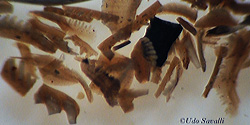
Conodont elements from Chappel Limestone, TX (Mississippian Period)
|
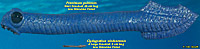
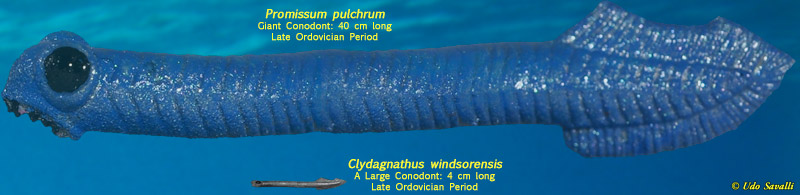
Reconstructions of possible life appearance of two conodonts known from preserved soft tissue. Both are larger than typical conodonts (which were mostly around 1 cm long)
|
|
"Ostracoderms"
Characteristics
- Paraphyletic assemblage of extinct, armored jawless fishes (the term 'Ostracoderm' is not much used anymore, but we will use it here for simplicity to represent several extinct classes)
- Dermal bone forms body armor
- Some had paired lateral spines or pectoral fins
- Most were probably filter feeders or fed on soft benthic invertebrates
- Lived from Ordovician to Devonian (480-360 Ma)
See also additional examples of ostracoderm fish fossils
|
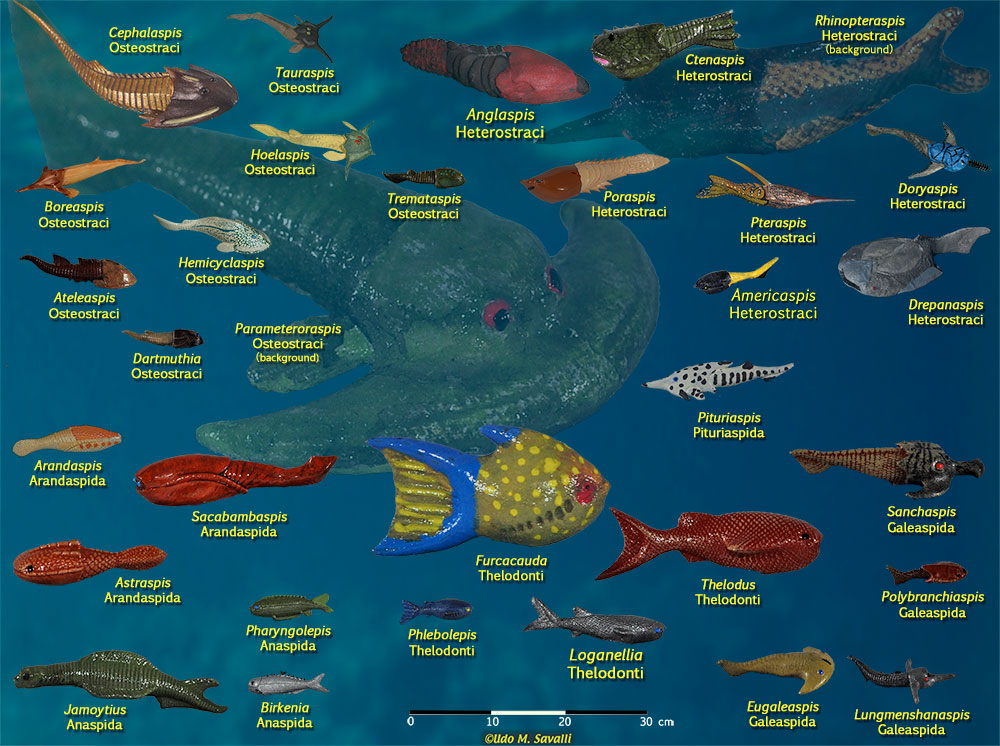
The diversity of "ostracoderm" armored jawless fishes, as represented by life models. Shown to scale (see scale bar). Some, such as the Thelodonti, have bony scales instead of more extensive armor. The major clades (roughly Classes) are indicated but you do not need to know them.
View Larger Image
|
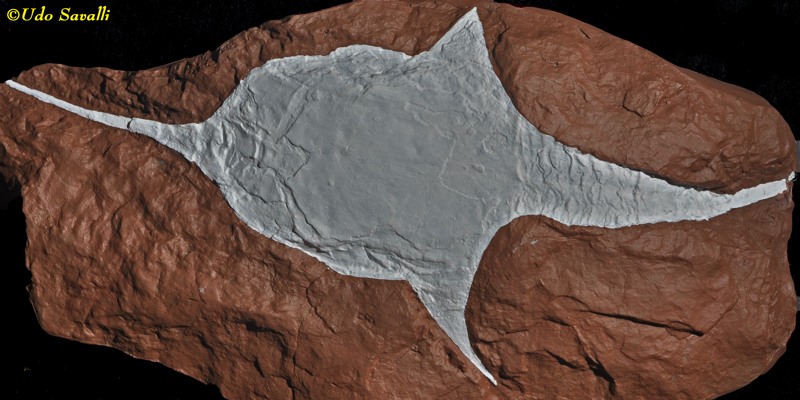
Fossil cast of Doryaspis arctica (Early Devonian Period; Norway; Clade Heterostraci)
|
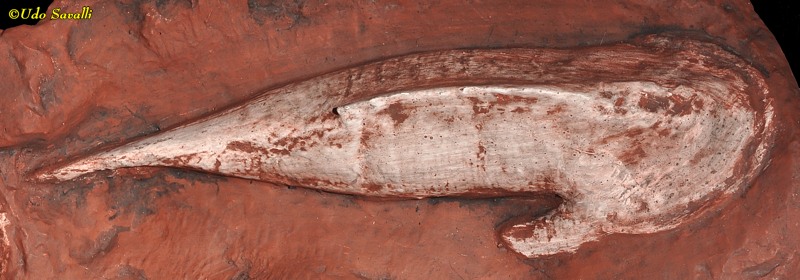
|
Fossil cast of Hemicyclaspis murchisoni (Early Devonian Period; Scotland; Clade Osteostraci)
|
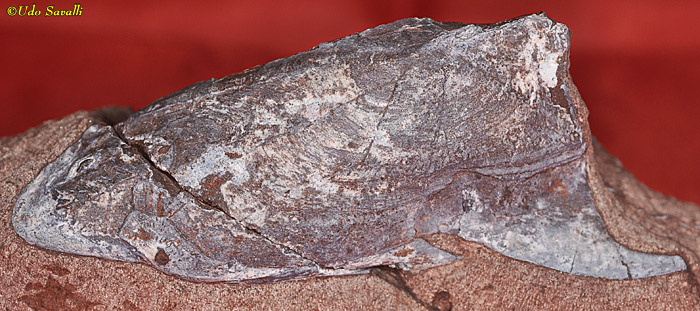
|
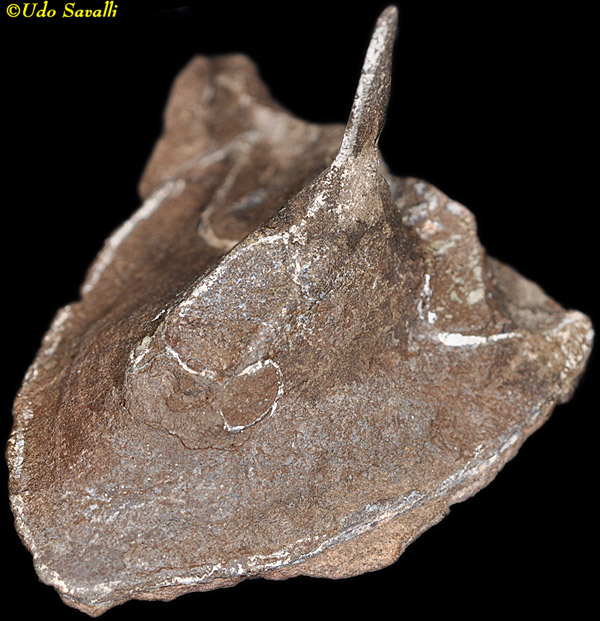
Fossil cast of Pattenaspis rogalai head shield (Early Devonian Period, 410 Ma; Ukraine; Clade Osteostraci). Compare to the model of Hemicyclaspis above, which is a close relative
|
Fossil of Podolaspis sp. anterior shields (Early Devonian, 413 Ma; Ukraine; Clade Heterostraci). Compare to the model of Pteraspis above, which is a close relative.
|
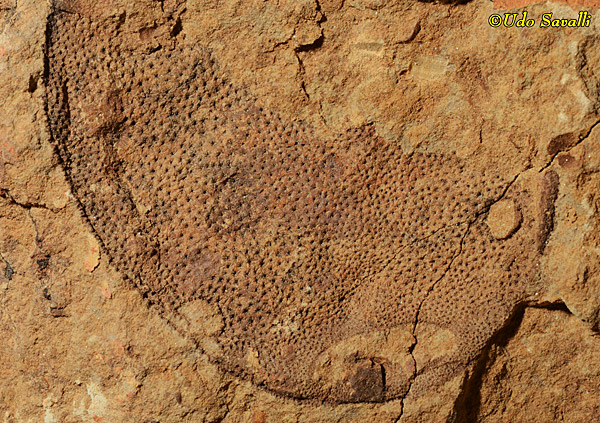
|
|
Fossil of Polybranchiaspis sp. partial head shield, with both eyes and mouth visible (Early Devonian Period, 419-411 Ma; China; Clade Galeaspida). Compare the model above.
|
|
Placoderms
Characteristics
- Placoderms are a group of early gnathostomes
- Bony plates on head and anterior body
- Well-developed jaws, but lacked teeth
- 2 pairs of paired fins
- Most were probably bottom dwellers
- Lived from Silurian to Devonian (430-360 Ma)
- They may be a paraphyletic group
See also additional examples of placoderm fossils
|
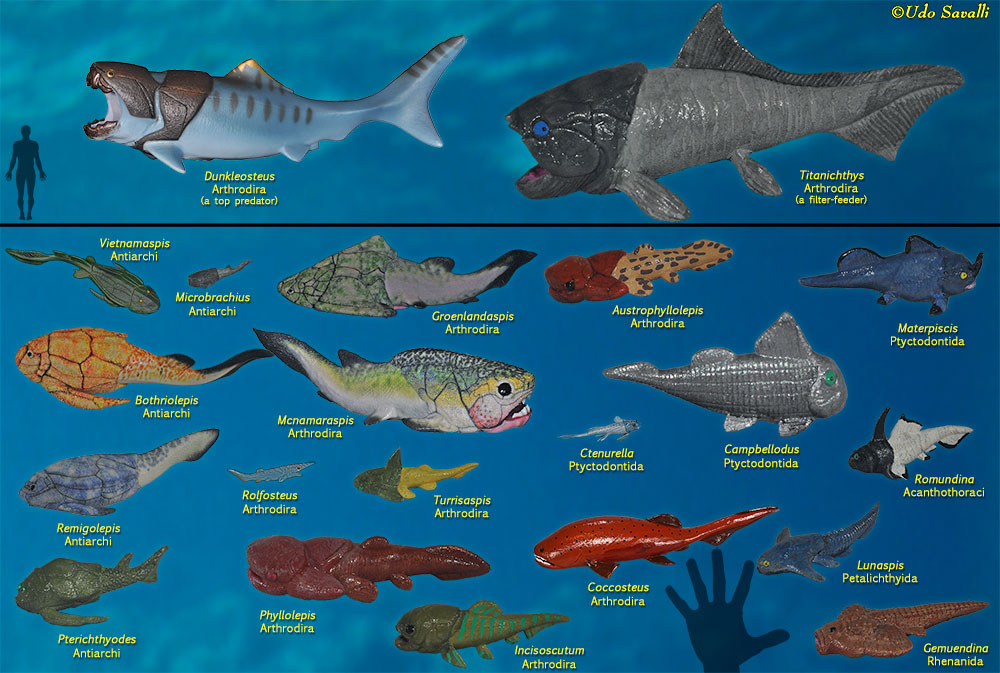
The diversity of placoderm fishes, as represented by life models. Shown to two scales. The major clades (Orders) are indicated but you do not need to know them.
View Larger Image
|
|
|
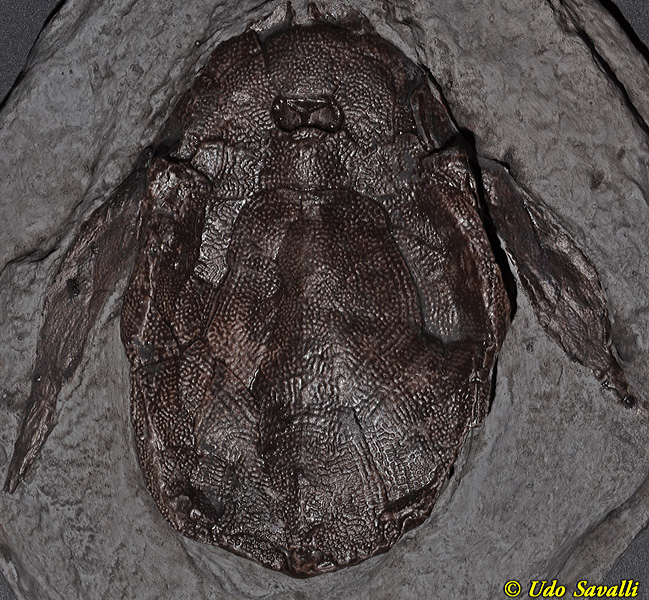
Fossil cast of Bothriolepis canadensis (Late Devonian, 387-360 Ma; North America; Clade Antiarchi)
|
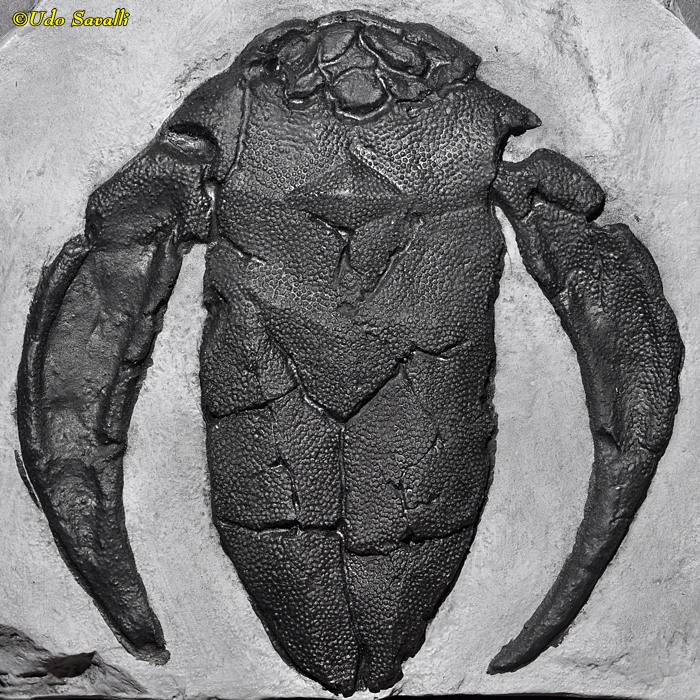
Fossil cast of Pterichthyodes milleri (Early Devonian Period; Scotland; Clade Antiarchi)
|
|
|
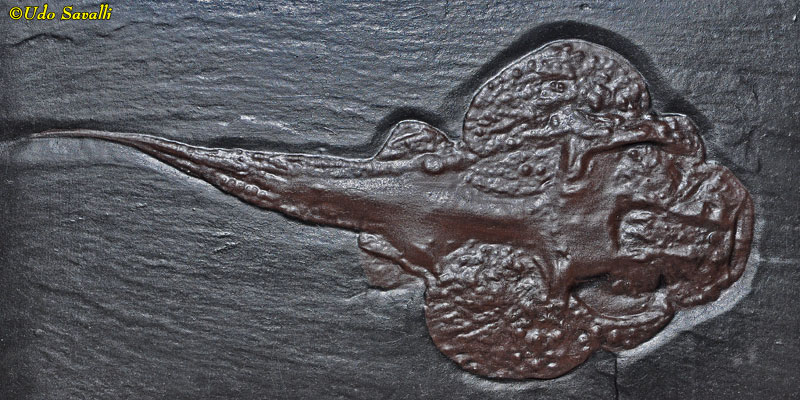
Fossil cast of Gemuendina stuertzi (Early Devonian, Germany; Clade Rhenanida)
|
|
Acanthodians† & Prehistoric Chondrichthyans
Characteristics
- The phylogenetic position of Acanthodians (the "Spiny Sharks") has long been debated
- Recent studies suggest they are stem-chondrichthyans (more closely related to crown-group chondrichthyans than to bony fishes or placoderms)
- All have a cartilagenous endoskeleton
- Lack dermal armor plates but have bony dermal scales (either rhomboid or placoid)
- Paired pectoral and pelvic fins (some acanthodians with additional pairs of ventral finlets or spines)
- All except caudal fins usually had an enlarged dentine spine along anterior edge (lost to varying degrees among the true chondrichthyans.
- Tail strongly heterocercal
- Some acanthodians had rhomboid scales similar those of some bony fish (e.g. gars)
- Acanthodians lived from Silurian to end of Permian; Chondrichthyans survived to modern times
See also additional examples of acanthodian & chondrichthyan fossils
|
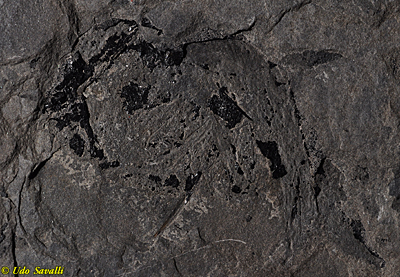
Cheiracanthus sp. fossil (Devonian Period, 450 Ma; UK)
See also labeled photo.
|
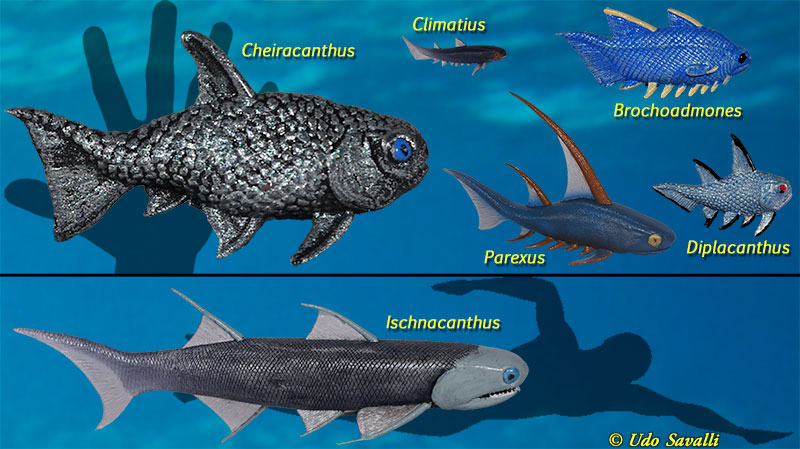
Life models of various Acanthodians (stem-Chondrichthyes) in two scales
View Larger Image
|
Some Prehistoric Chondrichthyans
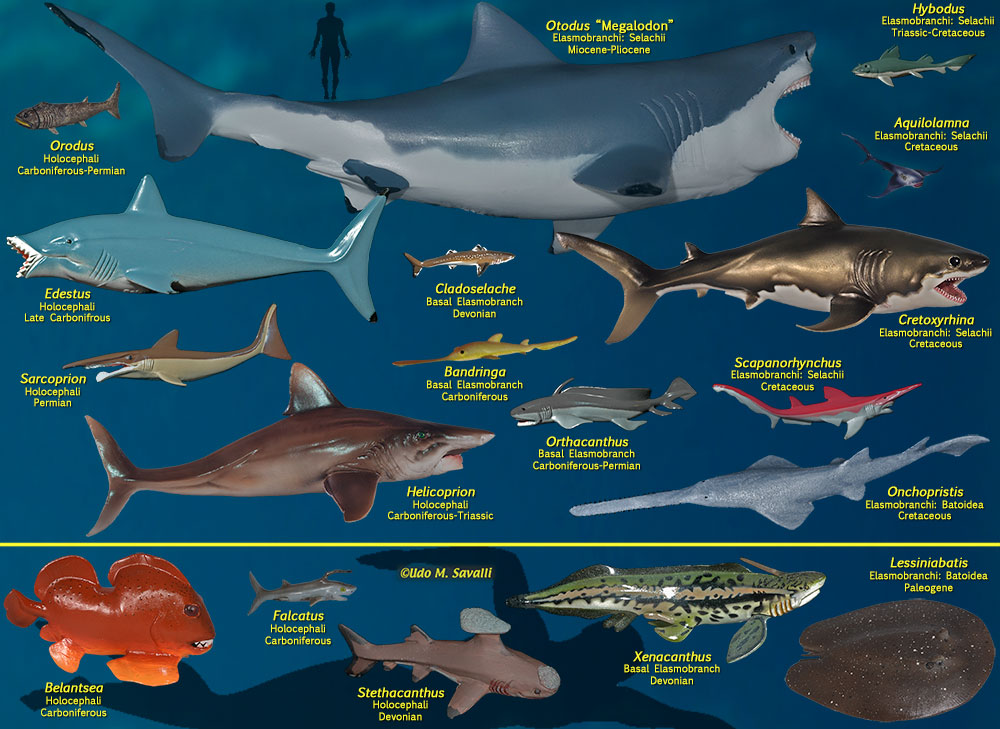
A sampling of prehistoric chondrichthyans represented by models. Shown in two scales. Cretoxyrhina is roughly the same size as a modern great white shark.
View Larger Image
|
The Whorl-toothed Shark, Helicoprion sp.
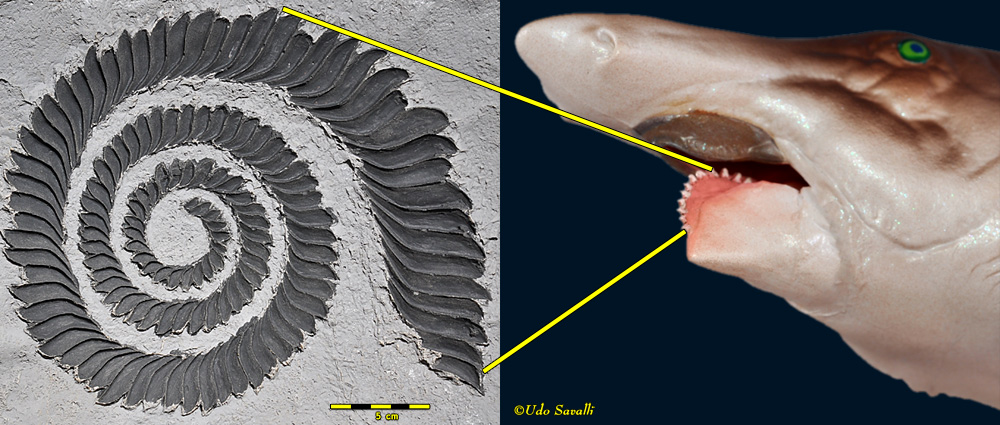
A typical Helicoprion fossil tooth whorl (replica; left), and its position in the reconstructed animal (right)
|
The Scissor-toothed Shark, Edestus sp.
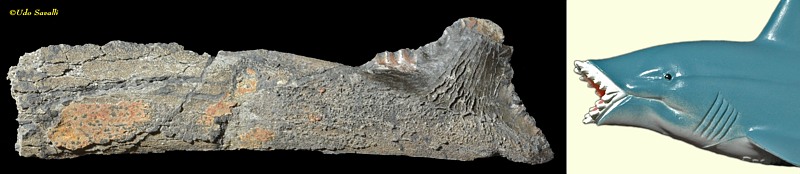
The fossil "blade" and anterior tooth of Edestus heinrichi (left), and an Edestus model (right), although the model is not completely accurate and should only have a single central row of teeth in the upper and lower jaw.
|
|