Chondrichthyes Characteristics
- General gnathostome characteristics:
- Jaws (with calcified teeth in extant groups)
- Serially arranged vertebrae
- Pectoral and pelvic girdles support paired fins
- Skeleton composed of cartilage (no bone)
- Heterocercal tail
- Placoid scales
- Claspers on male pelvic fins
See also examples of Chondrichthyan fossils
|
|
Subclass Holocephali — Chimaeras
Order Chimaeriformes
- Chimaeras, ratfishes, etc. (37 species)
- Enlarged head with beak-like teeth
- Upper jaw fused to cranium
- Mostly scale-less body
- All but one pair of gill slits covered by operculum
- Base of pectoral & pelvic fins fleshy, rest with ceratotrichia
- 2 dorsal fins
- Marine; mostly deep water
|
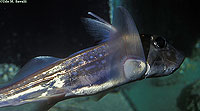
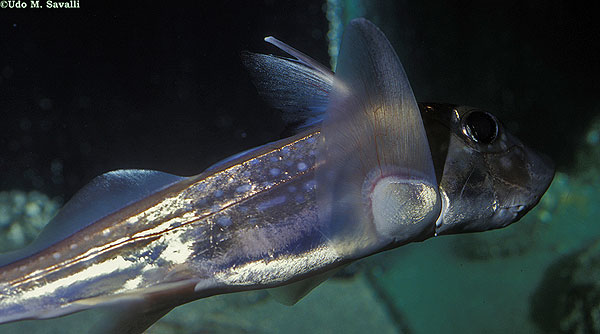
Chimaera, Hydrolagus sp.;
Order Chimaeriformes
|
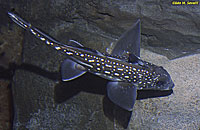
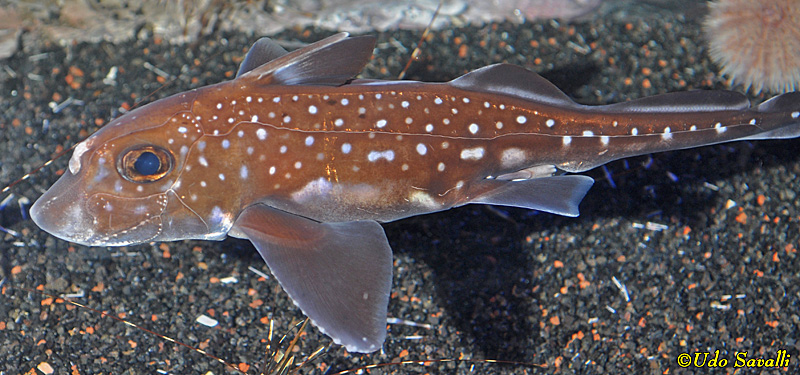
Spotted Ratfish, Hydrolagus colliei, female; Order Chimaeriformes
|
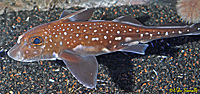
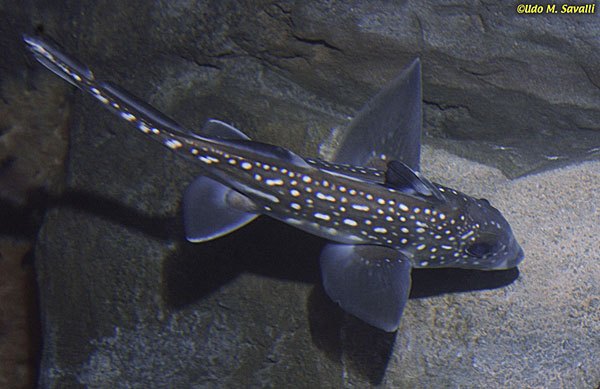
Spotted Ratfish, Hydrolagus colliei, male; Order Chimaeriformes
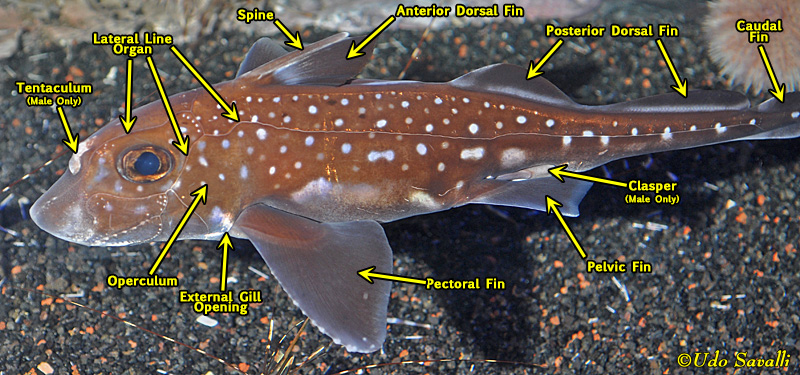
See also labeled photo.
|
|
Subclass Elasmobranchi; Clade Selachii — Sharks
Elasmobranch Characteristics
- Retain many primitive gnathostome characteristics
- Body covered in placoid scales
- Upper jaw not fused to cranium
- 5-7 externally visible gill slits
- Ampullae of Lorenzini
| Selachian Characteristics
- Sharks
- Most with fusiform, streamlined shape
- Gill slits are located laterally (side of head)
- Pectoral fins not attached to head
- Mostly marine
|
See also
Chondrichthyan Anatomy page
|
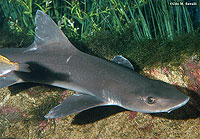
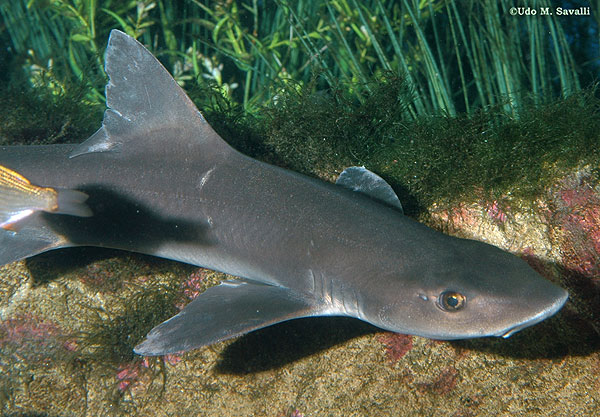
Gray Smoothhound Shark, Mustelus californicus
(Order Carcharhiniformes)
|
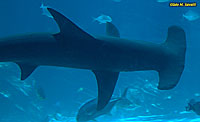
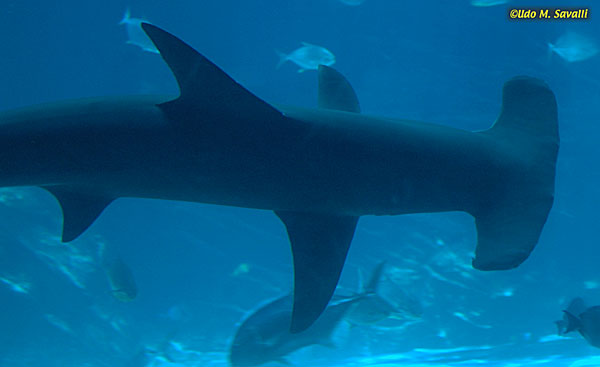
Great Hammerhead, Sphyrna mokarran
(Order Carcharhiniformes)
|
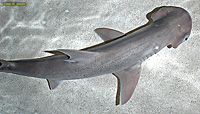
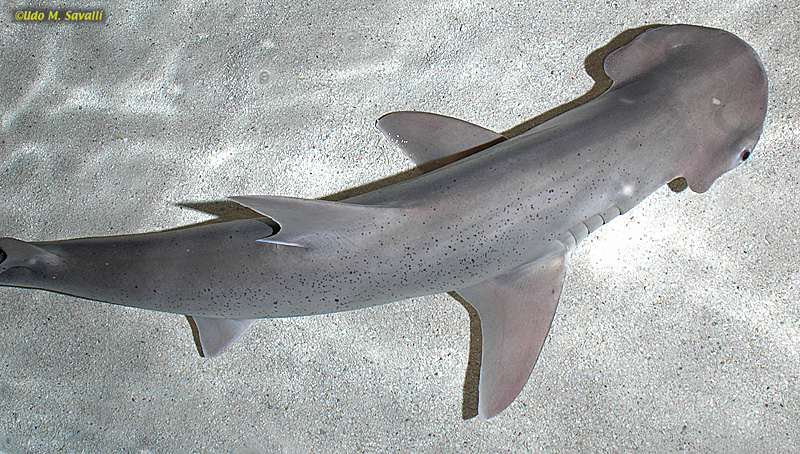
Bonnethead Shark, Sphyrna tiburo
(Order Carcharhiniformes)
|
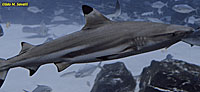
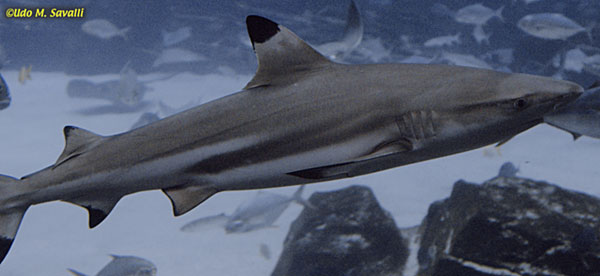
Black-tipped Reef Shark, Carcharhinus melanopterus
(Order Carcharhiniformes)
|
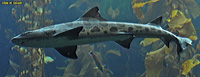
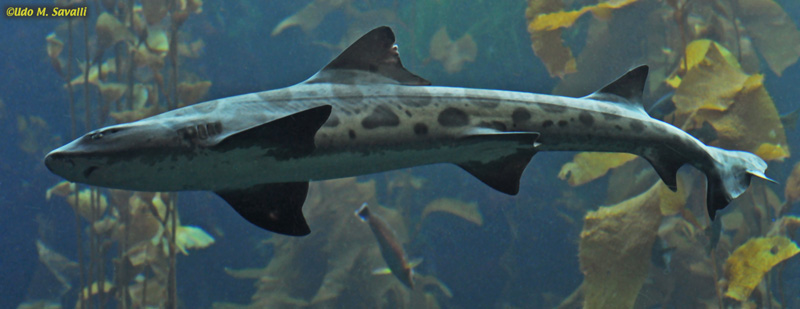
Leopard Shark, Triakis semifasciata
(Order Carcharhiniformes)
|
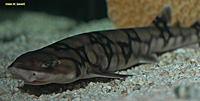
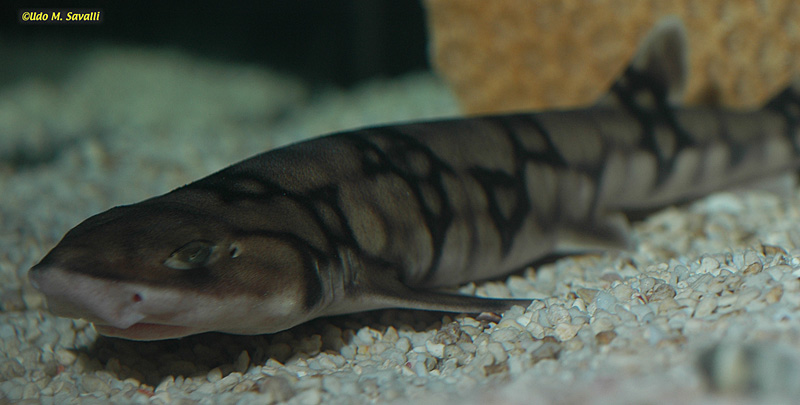
Chain Catshark, Scyliorhinus retifer
(Order Carcharhiniformes)
|
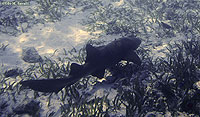
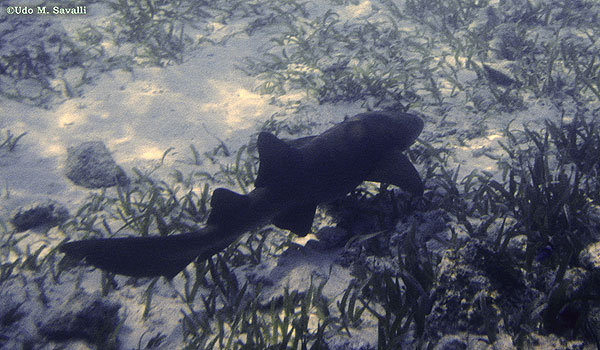
Nurse Shark, Ginglymostoma cirratum; Belize (Order Orectolobiformes)
|
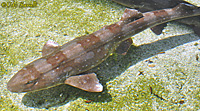
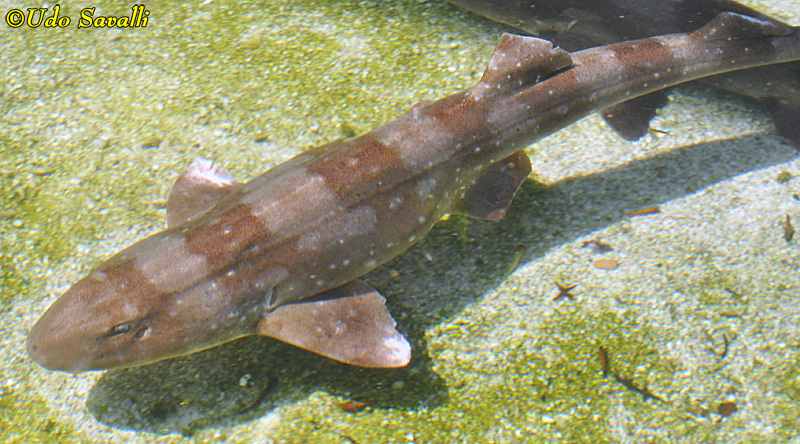
White-spotted Bamboo Shark, Chiloscyllium plagiosum
(Order Orectolobiformes)
|
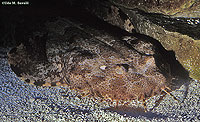
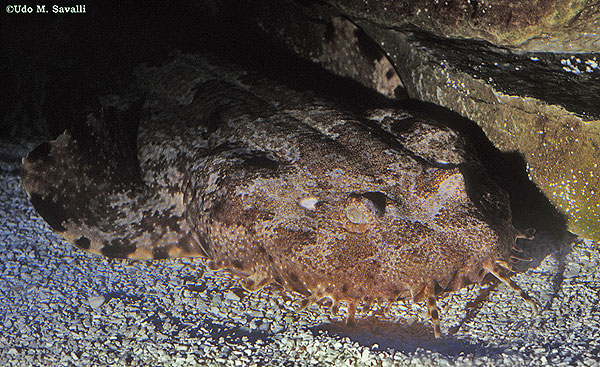
Ornate Wobbegong Shark, Orectolobus ornatus
(Order Orectolobiformes)
|
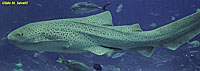
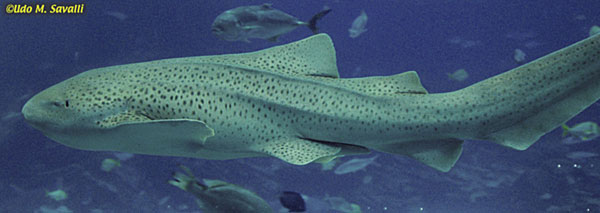
Zebra Shark, Stegostoma fasciatum
(Order Orectolobiformes)
|
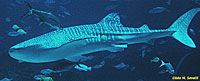
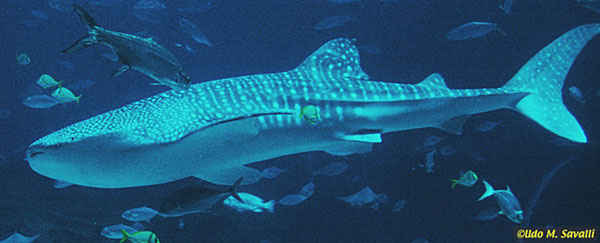
Whale Shark, Rhincodon typus; the largest extant fish is a filter feeder of plankton
(Order Orectolobiformes)
|
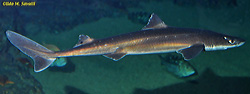
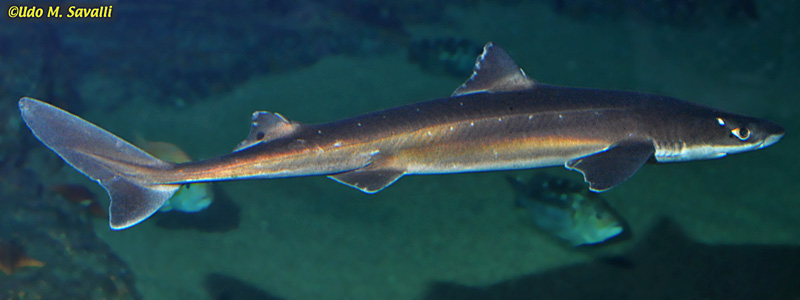
Spiny Dogfish, Squalus acanthias
(Order Squaliformes)
See also labeled photo.
|
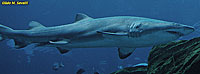
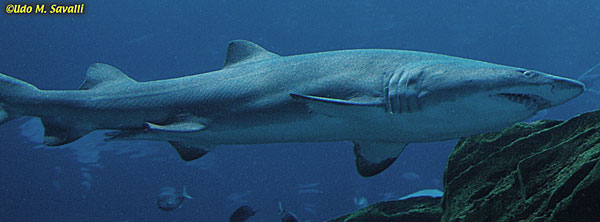
Sand Tiger Shark, Carcharias taurus;
(Order Lamniformes)
|
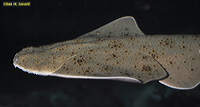
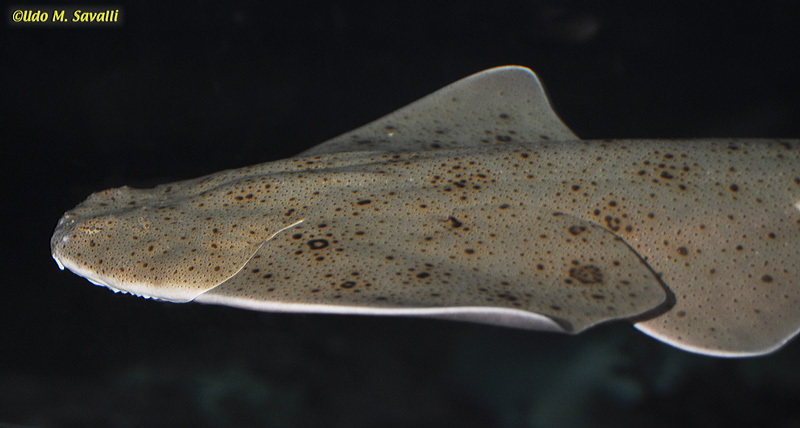
Pacific Angel Shark, Squatina californica;
(Order Squatiniformes)
|
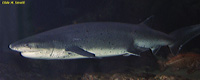
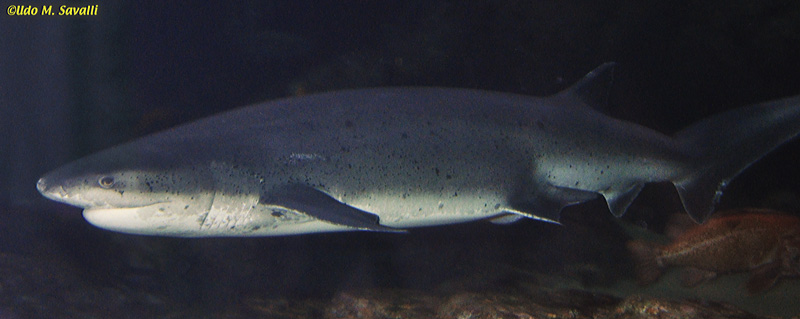
Broadnose Sevengill Shark, Notorynchus cepedianus;
(Order Hexanchiformes);
one of the most primitive sharks (most other sharks have only 5 external gill slits)
|
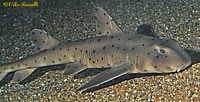
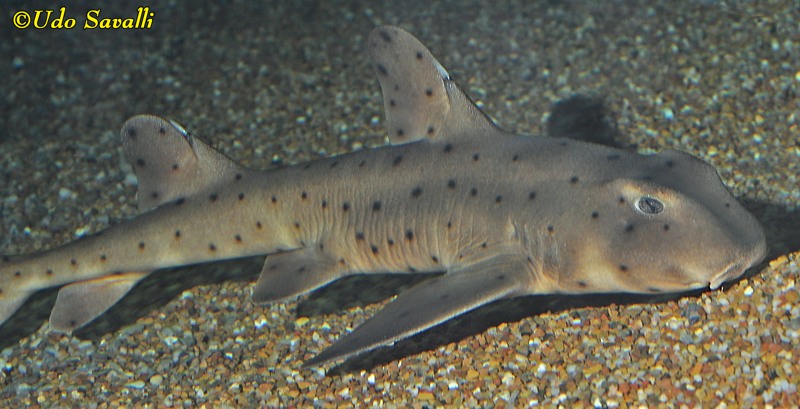
Horn Shark, Heterodontus francisci;
(Order Heterodontiformes)
|
|
Subclass Elasmobranchi; Clade Batoidea — Skates & Rays
Characteristics:
- Body flattened with enlarged pectoral fin fused to head
- Gill slits on ventral surface
- Eyes located dorsally
- Lack anal fin
- Most are bottom dwellers; some occur in fresh water
- You will not need to know the individual orders
|
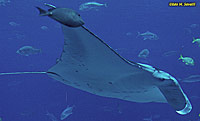
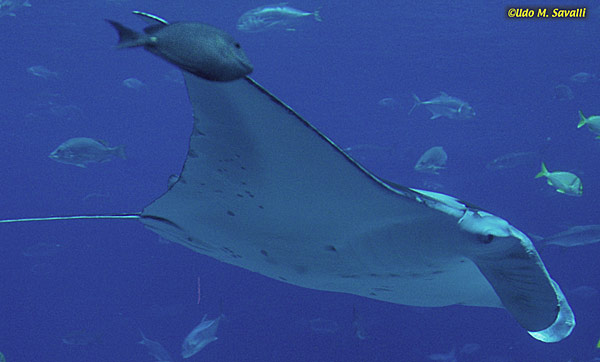
Manta Ray, Manta birostris: The world's largest ray, a plankton filter feeder
(Order Myliobatiformes)
|
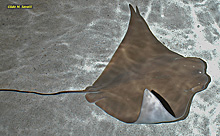
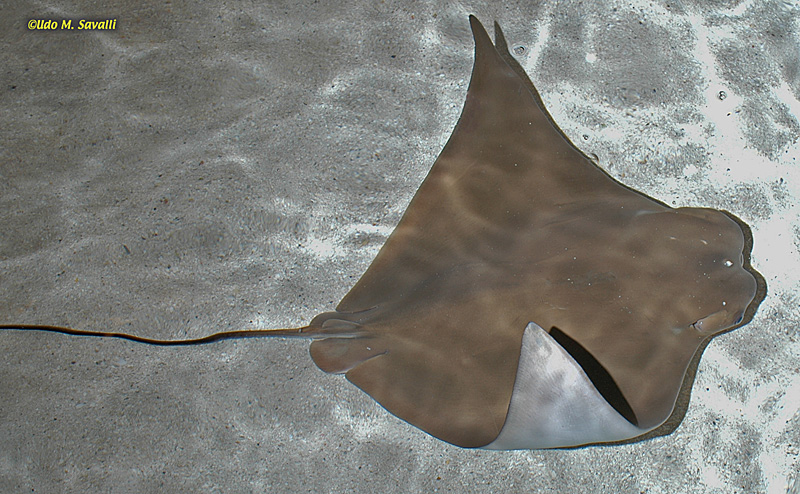
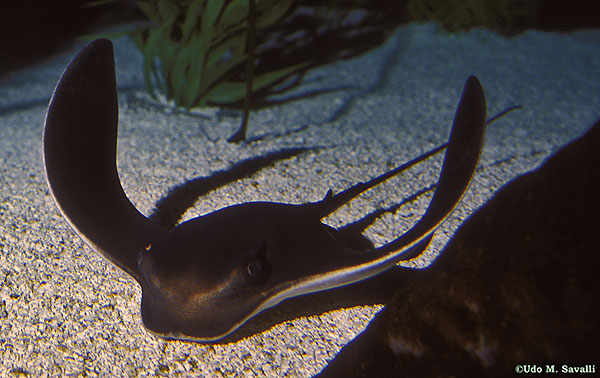
Cownose Ray, Rhinoptera bonasus
(Order Myliobatiformes)
|
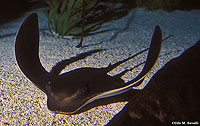
Spotted Eagle Ray, Myliobatis aquila
(Order Myliobatiformes)
|
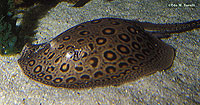
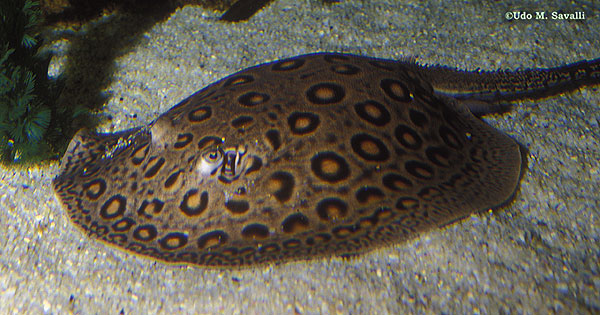
Ocellated Sting-Ray, Potamotrygon motoro
(Order Myliobatiformes)
|
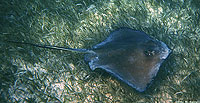
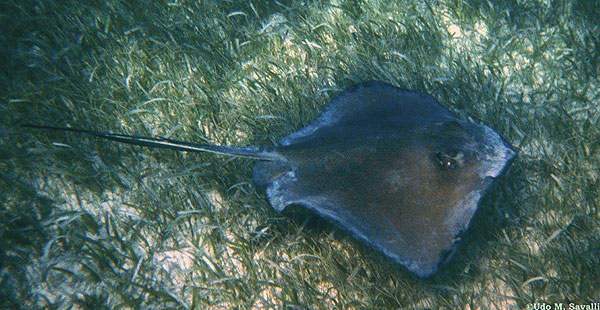
Southern Sting-Ray, Dasyatis americana; Belize
(Order Myliobatiformes)
|
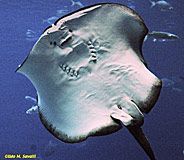
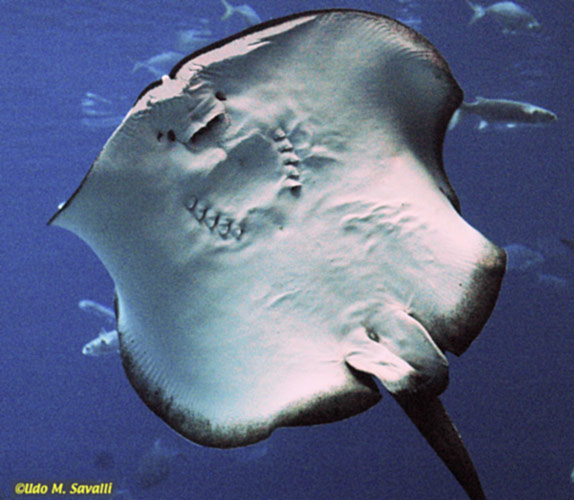
Leopard Whipray, Himantura undulata, ventral surface
(Order Myliobatiformes)
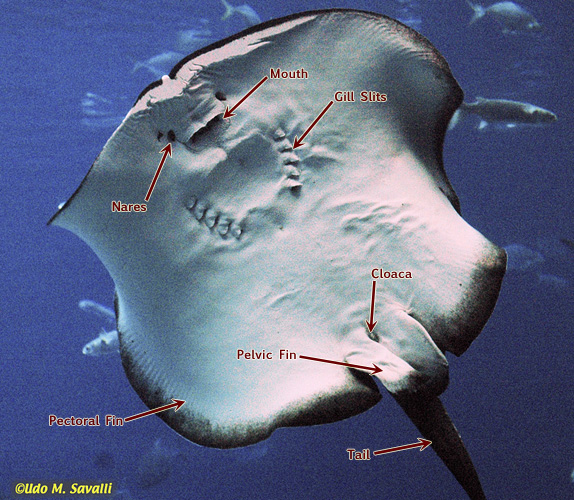
See also labeled photo.
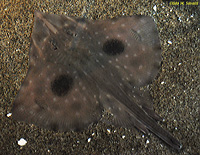
Big Skate, Raja binoculata
(Order Rajiformes)
|
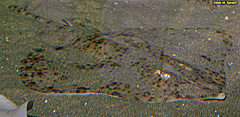
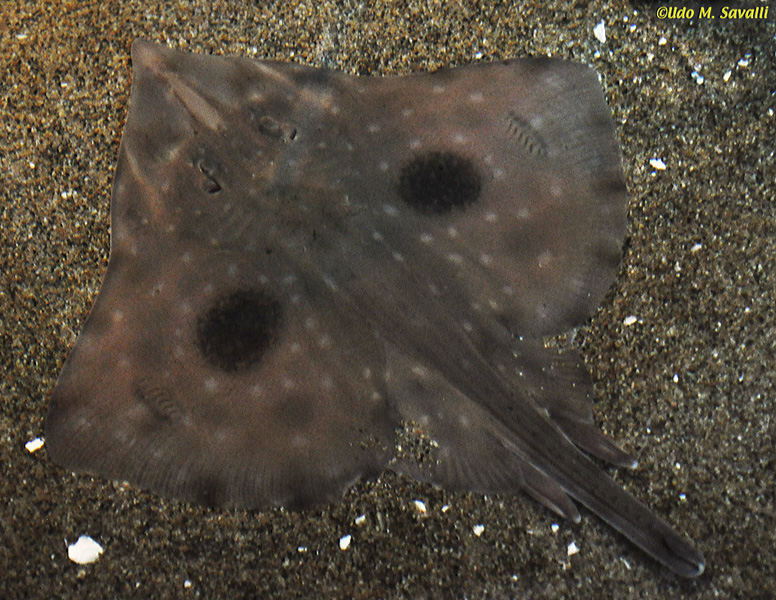
California Skate, Raja inornata
(Order Rajiformes)
|
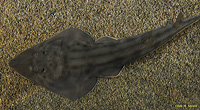
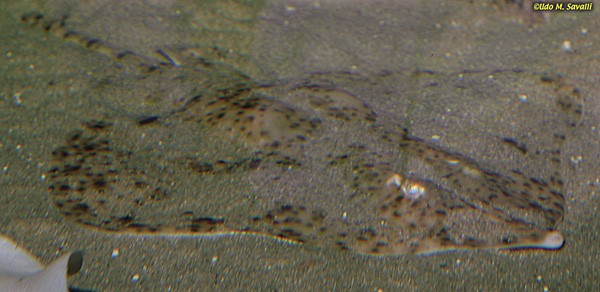
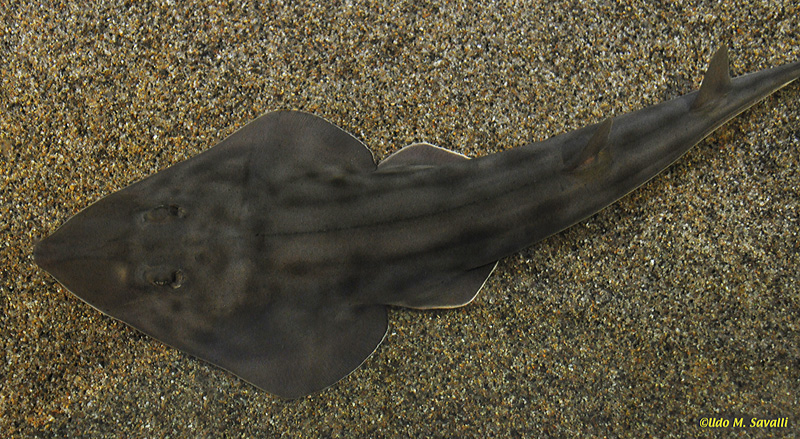
Shovelnose Guitarfish, Rhinobatos productus
(Order Rhinopristiformes)
|
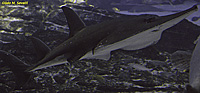
Giant Guitarfish, Rhynchobatus djidensis
(Order Rhinopristiformes)
|
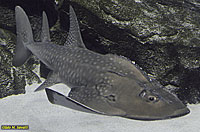
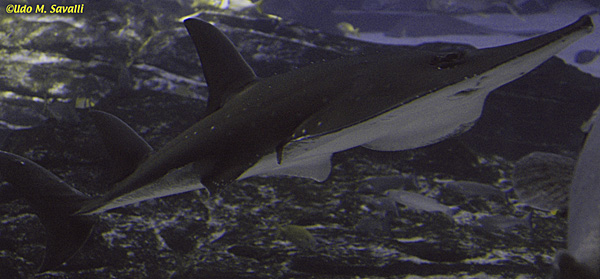
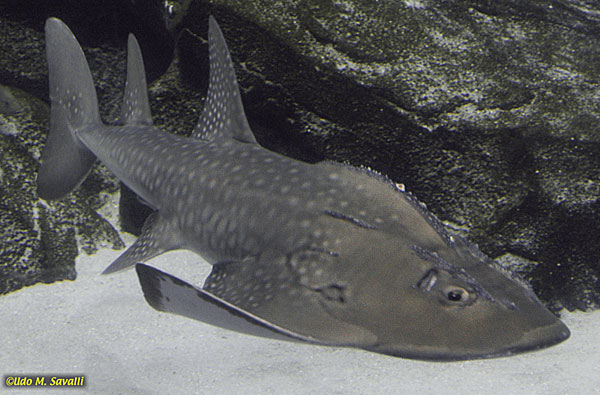
Shark Ray, Rhina ancylostoma
(Order Rhinopristiformes)
|
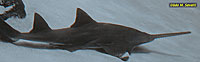
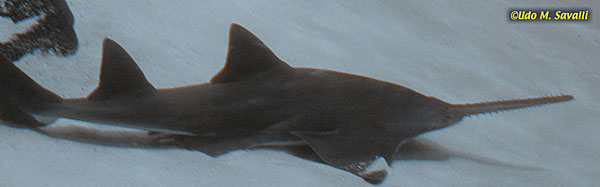
Largetooth Sawfish, Pristis microdon;
(Order Rhinopristiformes)
| |
|
|