Phylum Ciliophora
Characteristics
- Most unicellular; some colonial
- Cilia used for locomotion
- Body shape maintained by protein-fibrous pellicle
- Have both macro- and micronuclei
- Most with cytostome (=cell mouth)
- Reproduce asexually (fission) or via conjugation
|
|
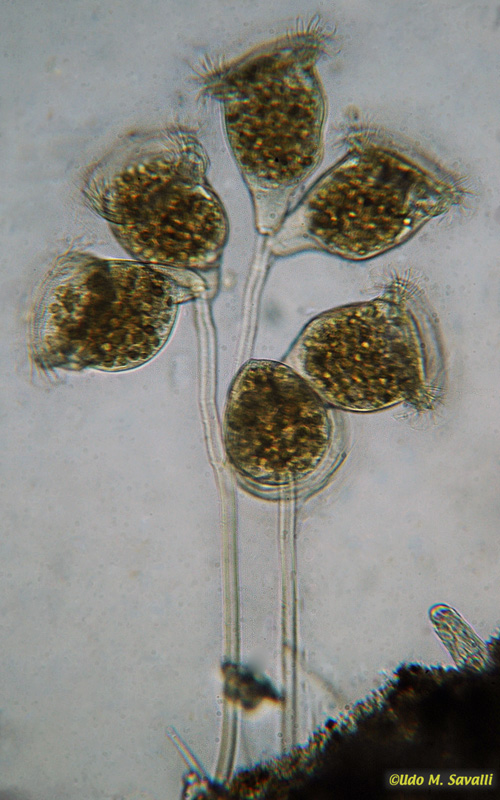
Carchesium sp., a stalked ciliate; collected Tres Rios, Toleson, AZ
|
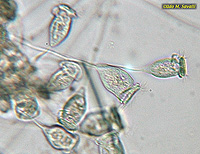
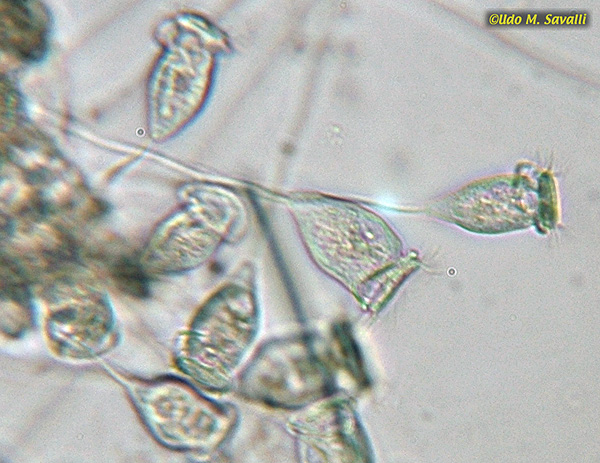
Vorticella sp., a stalked ciliate; 400x
|
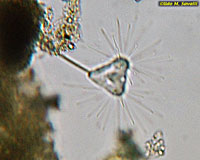
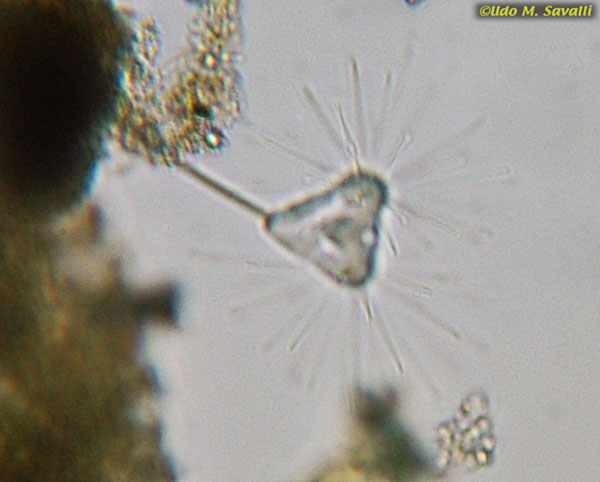
Acineta sp., a Suctorian that lost cilia as adult
|
|
|
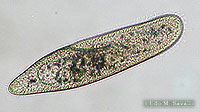
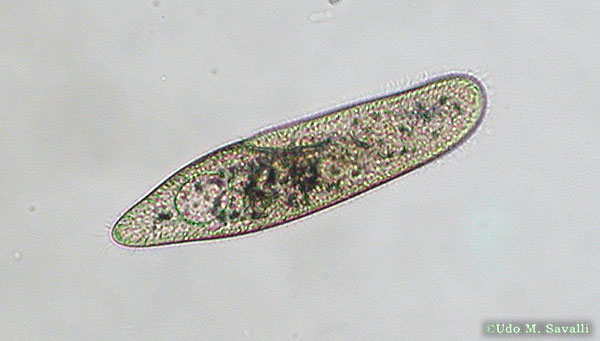
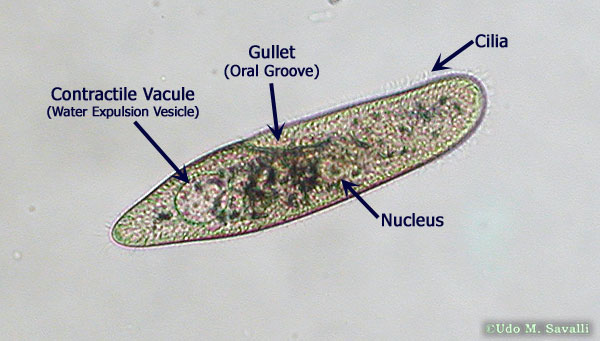
Paramecium caudatum, 400x
See also labeled photo.
|
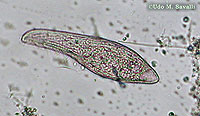
Blepharisma sp., 400x
|
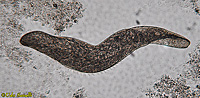
Spirostomum sp.
|
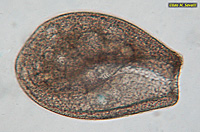
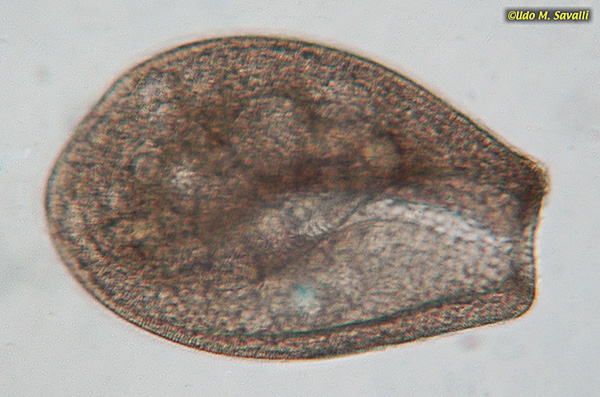
Bursaria truncatella; 100x
|
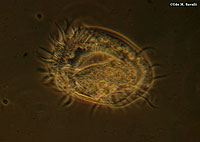
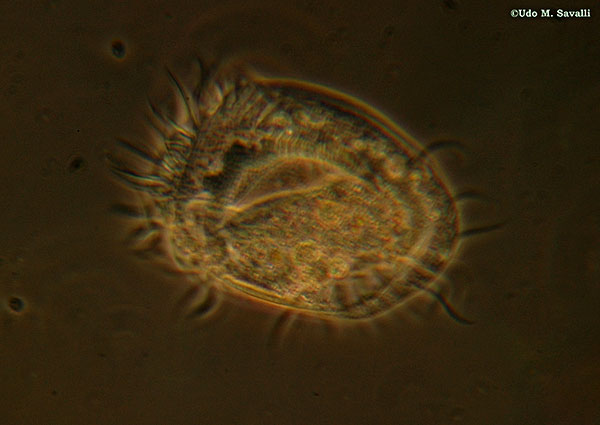
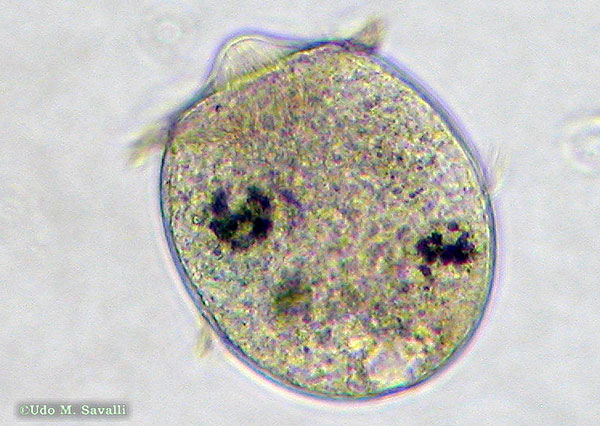
Euplotes sp., 400x
|
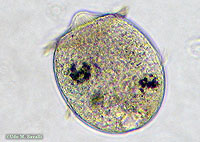
Didinium sp., 400x
|
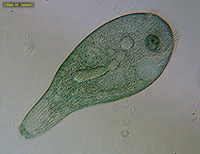
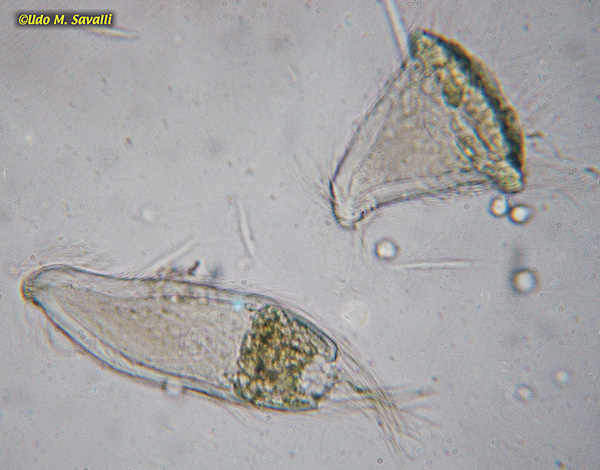
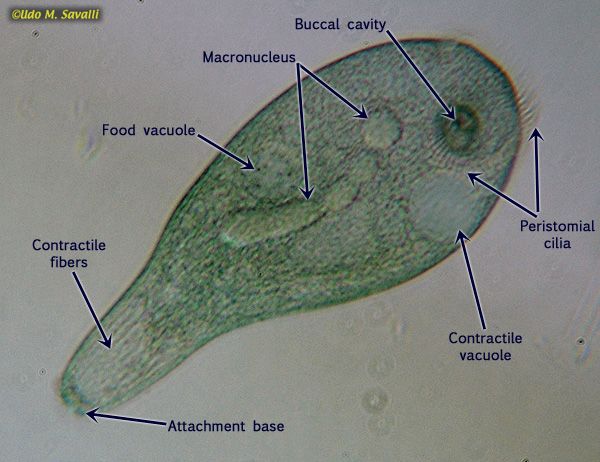
Stentor coeruleus, 200x
See also labeled photo.
|
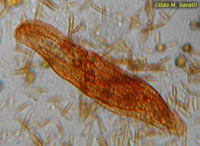
Holosticha sp., a large pigmented marine ciliate
|
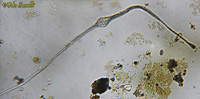
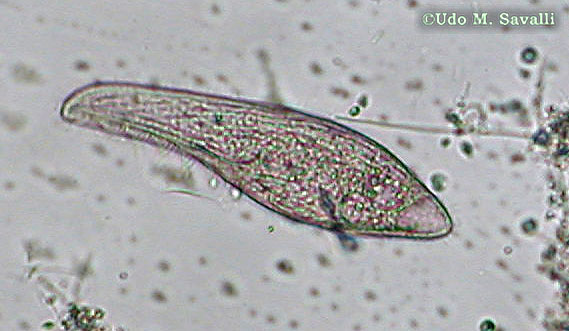
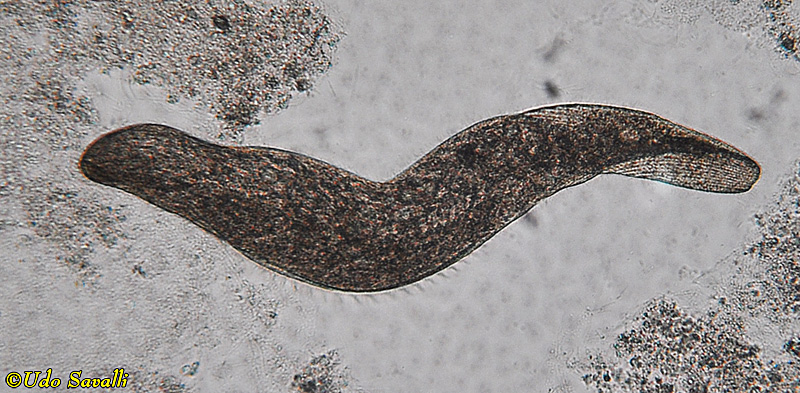
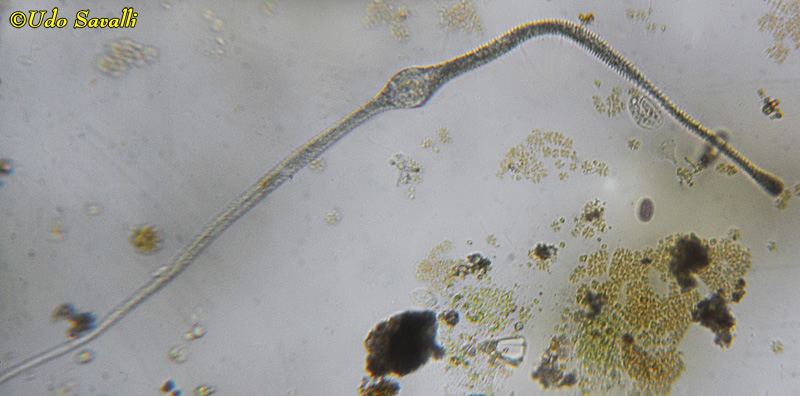
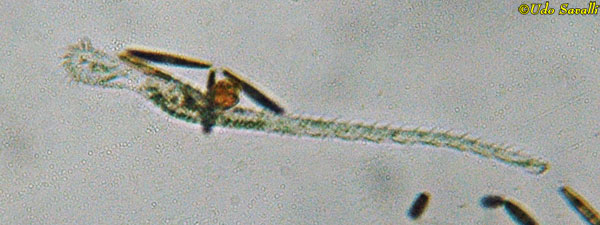
Tracheloraphis sp.; a worm-like marine ciliate
|
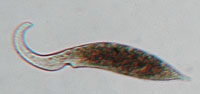
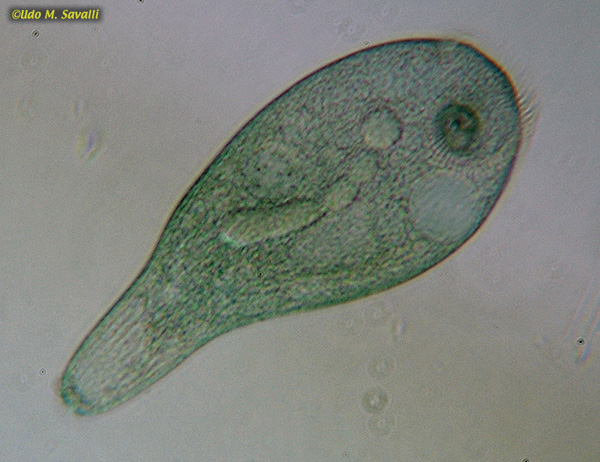
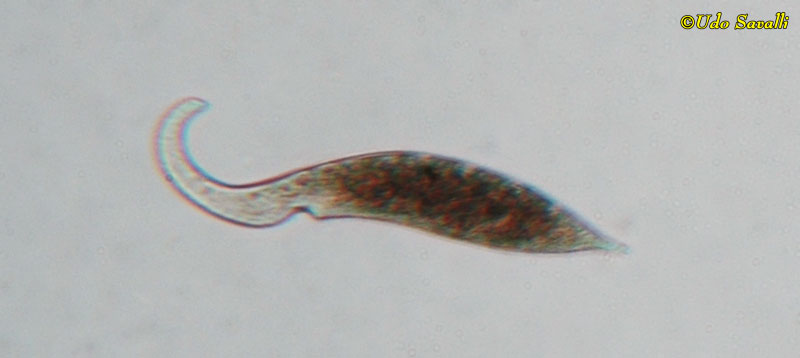
Dileptus sp. is a predatory cilate with an elongated, flexible proboscis
|
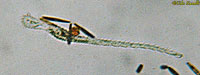
An elongated marine cilate, probably Epiclintes sp.
|
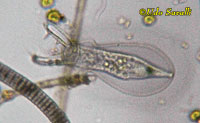
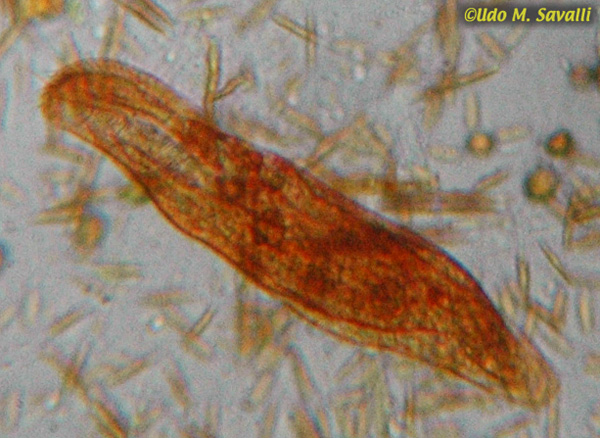
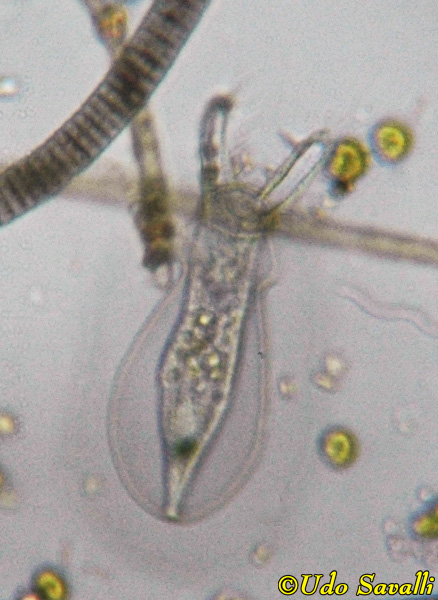
The winged cilate, Folliculina sp., a species with a test
|
Euplotes swimming (bright field, 20x objective lens); note also a Vorticella present
|
Spirostomum ciliate, showing its flexibility (bright field, 10x objective lens)
|
Tracheloraphis, an unusual worm-like marine ciliate (bright field, 10x objective lens)
|
|
Phylum Dinoflagellata (Dinozoa)
Characteristics
- Two flagella in grooves: one transverse, one longitudinal
- Both photosynthetic and hetertrophic forms; many can switch
- Some are bioluminescent
- Most are unicellular, but some form colonies
- Population booms cause "red tides"
- Many photosynthetic forms are endosymbiotic in other protozoans and animals such as corals
|
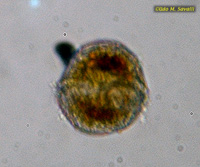
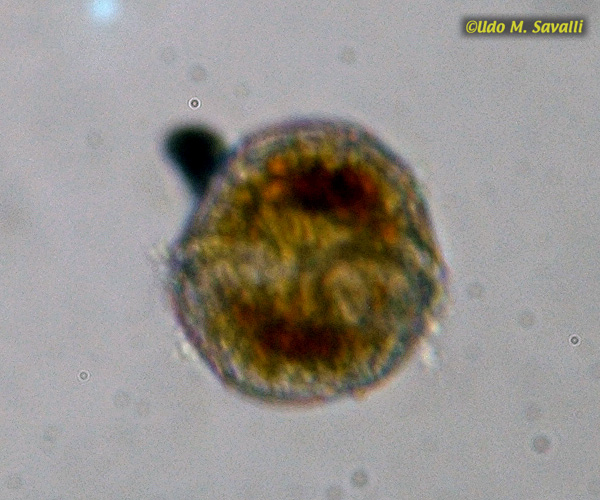
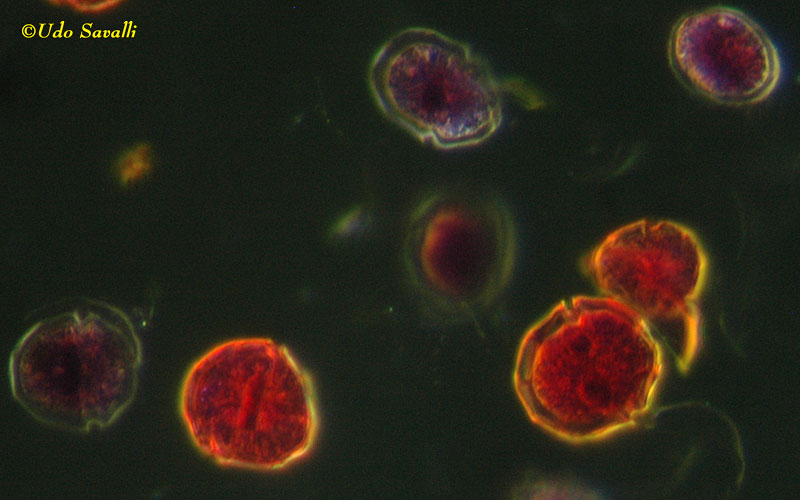
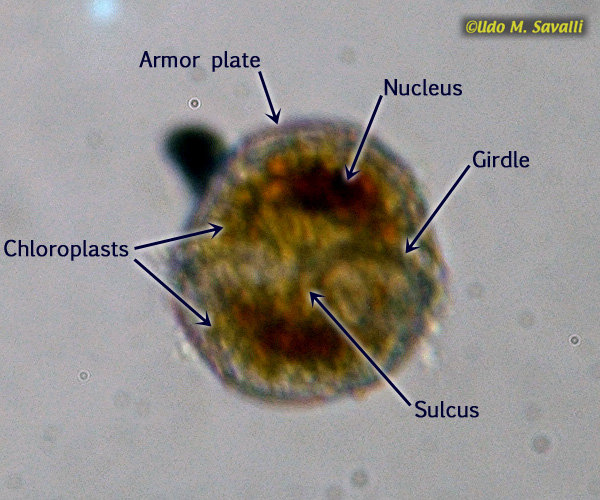
The Dinoflagellate, Peridinium sp., live individual
See also labeled photo. |
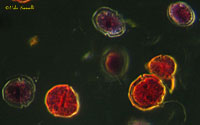
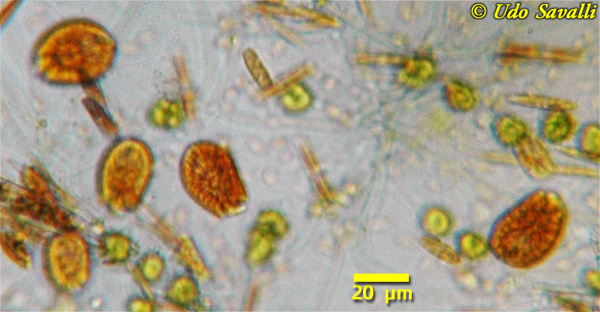
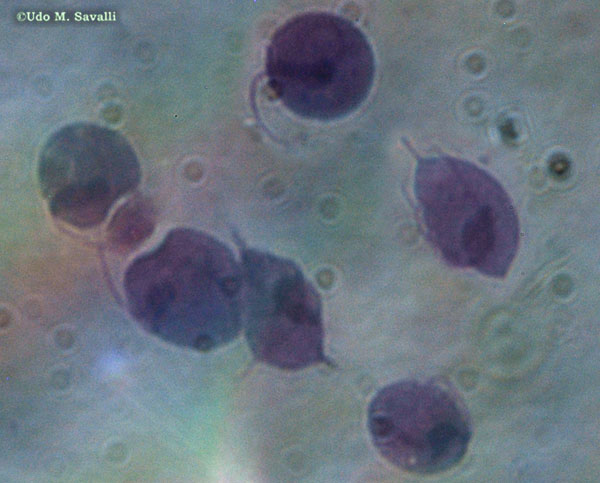
The Dinoflagellate, Peridinium sp., stained slide
|
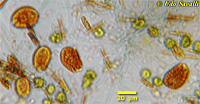
The marine dinoflagellate, Amphidinium sp.
|
|
Phylum Apicomplexa
Characteristics
- Unique apical complex (not visible with light microscope)
- Lack cilia, flagella, pseudopods
- All are parasitic
- Gregarines infect various invertebrates
- Coccidians infect mostly vertebrates
|
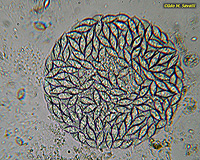
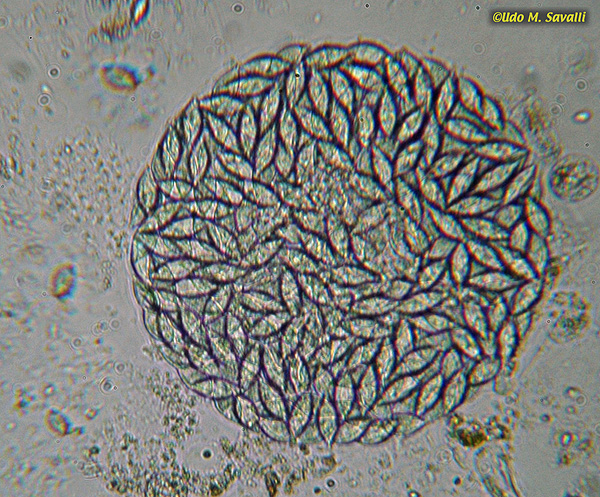
Monocystis lumbrici gametocyst and spores; a gregarine found in the seminal vesicles of earthworms; feeds on sperm; 400x
|
|
|
Phylum Metamonada
Characteristics
- Multiple flagella: 4 to 1000s
- Lack mitochondria
- All are endosymbionts of animals; may be beneficial or harmful
|
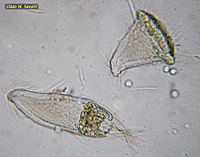
Trichonympha sp., a Parabasalid endosymbiote from the guts of termites where it digests wood; 200x
|
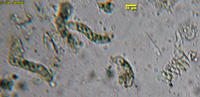
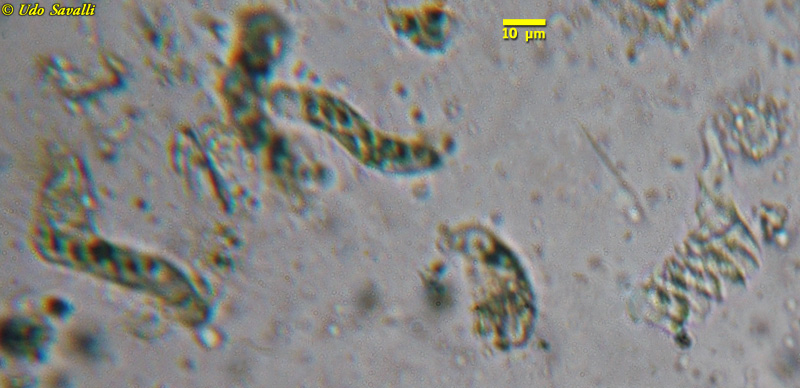
Wood-digesting endosymbiotes from termites gut: 2 Dinenympha sp. on left and a Pyrsonympha sp. on lower right (both are Oxymonadids).
|
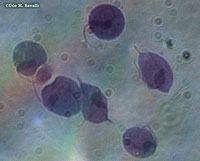
Trichomonas vaginalis, a parasite in human urogential tracts; stained whole mount; 400x
|
|
Phylum Euglenozoa (Euglenida)
Characteristics
- Have 1 or 2 flagella
- Single nucleus
- Reproduce asexually (fission)
- Includes free-living and parasitic forms
- Euglenids are mostly free-living
- Have proteinaceous pellicle to hold shape
- Most are photosynthetic via secondary endosymbiosis
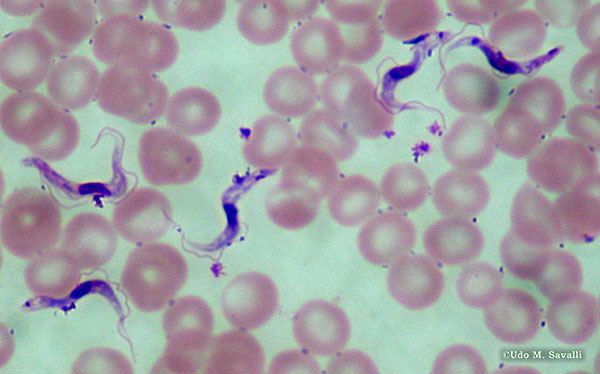
- Kinetopastids are mostly parasitic
- Flagellum forms edge of undulating membrane along elongted cell
- Greatly elongated mitochondrion (stained dark in photo)
- Many have complex life cycles, often with multiple hosts
|
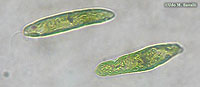
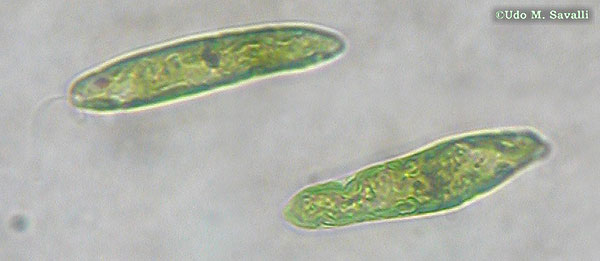
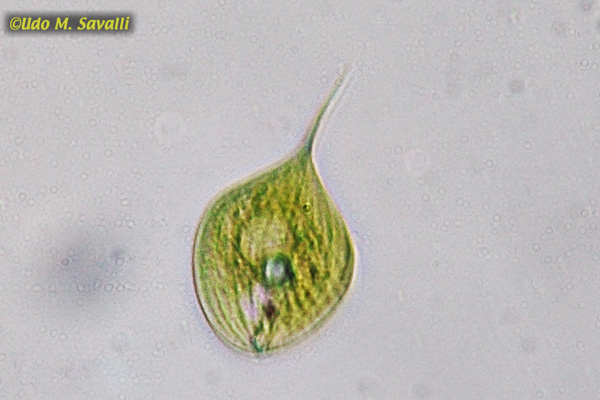
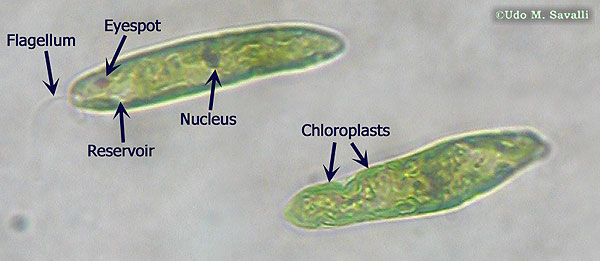
Euglena sp.; 400x
See also labeled photo
|
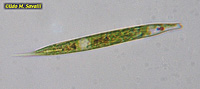
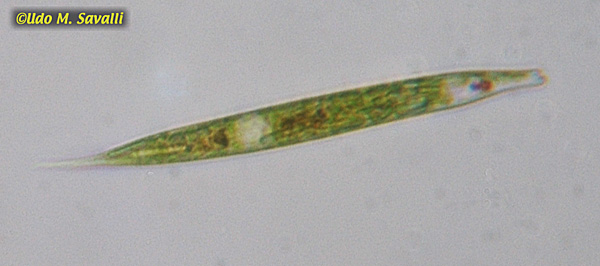
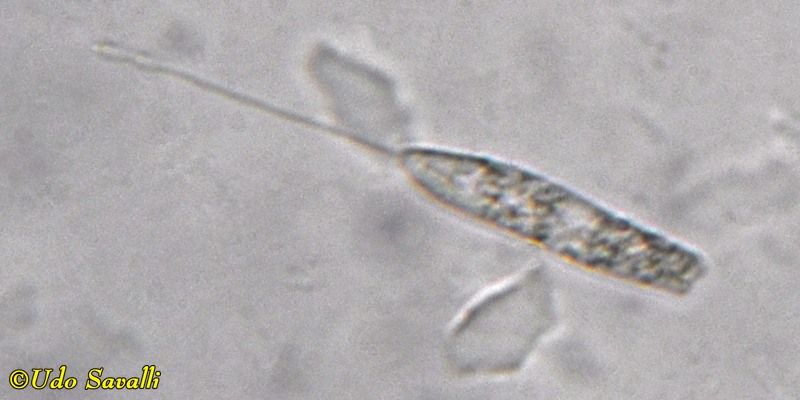
Lepocinclis acus, an elongated species; 400x
|
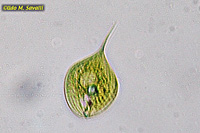
Phacus sp., AZ; 200x
|
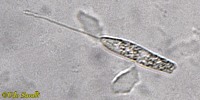
Peranema sp.; a non-photosynthetic euglenid; 200x
|
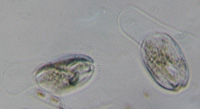
A non-photosynthetic marine flagellate, probably Petalomonas sp.; 200x |
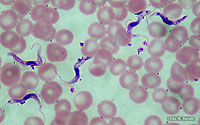
Trypanosoma rhodesiensae in blood smear; Causes African Sleeping Sickness. 1000x
|
|
Phylum Amoebozoa
Characteristics
- Cell surrounded by plasma membrane; some form an external test
- Pseudopodia used for locomotion
- Most free-living, but a few are endosymbiotic, either commensal or parasitic
- Reproduce asexually (fission)
- The classification of ameboid protozoans remains controversial
|
|
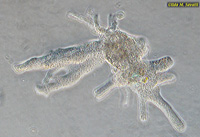
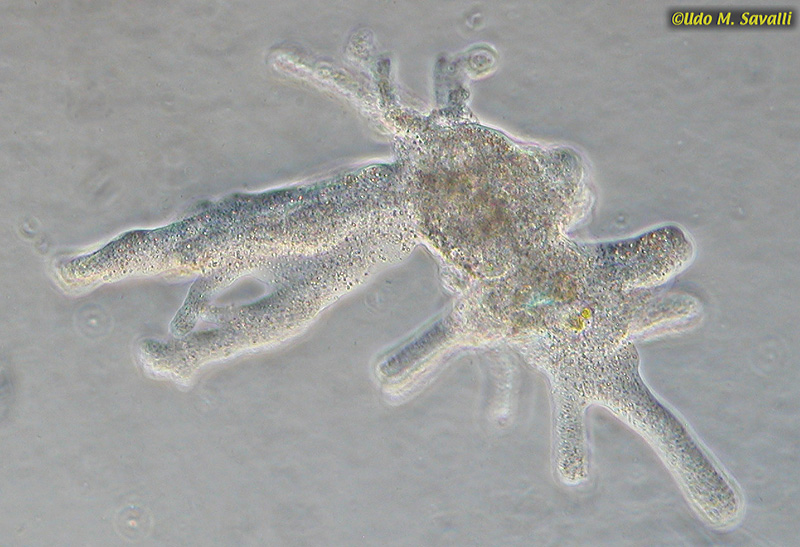
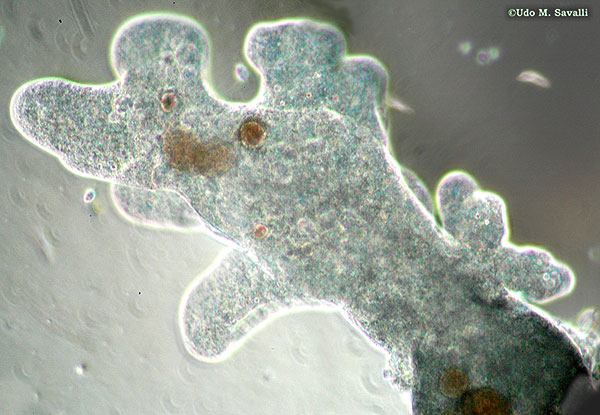
Amoeba proteus; 100x
|
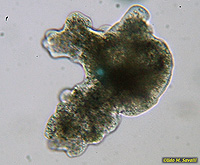
Amoeba proteus; 100x
|
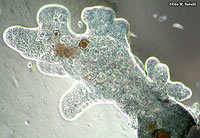
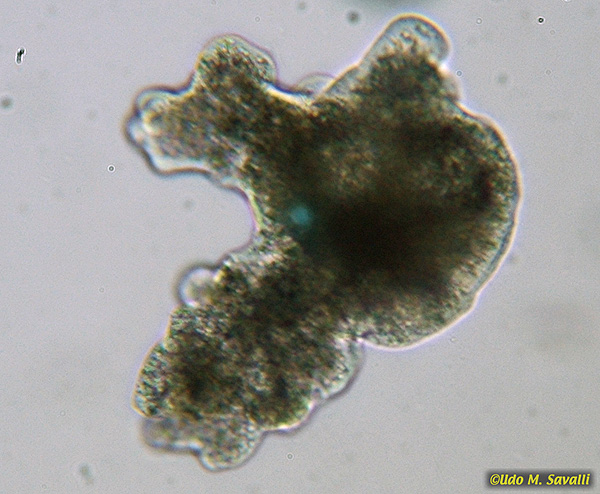
Chaos carolinensis (a.k.a. Pelomyxa carolinensis), 100x
|
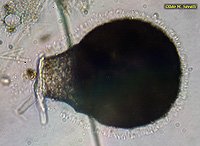
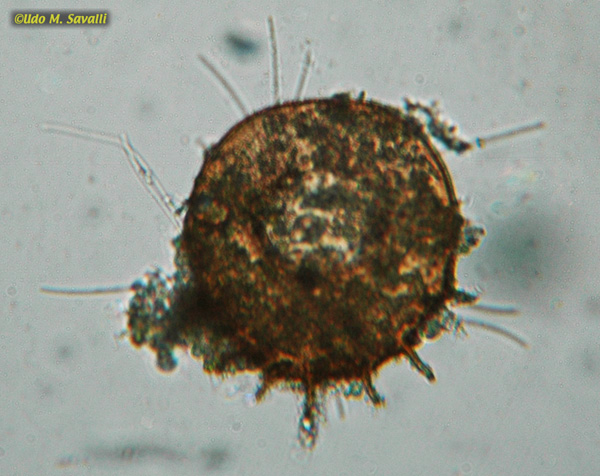
Difflugia sp., an amoeba with a test composed of mineral grains; 400x
|
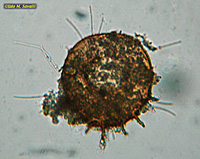
Arcella sp., an amoeba with a chitinous test (dorsal view); 200x
|
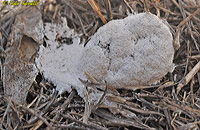
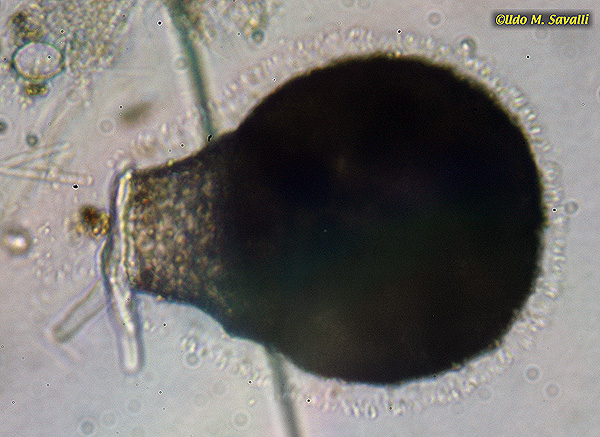
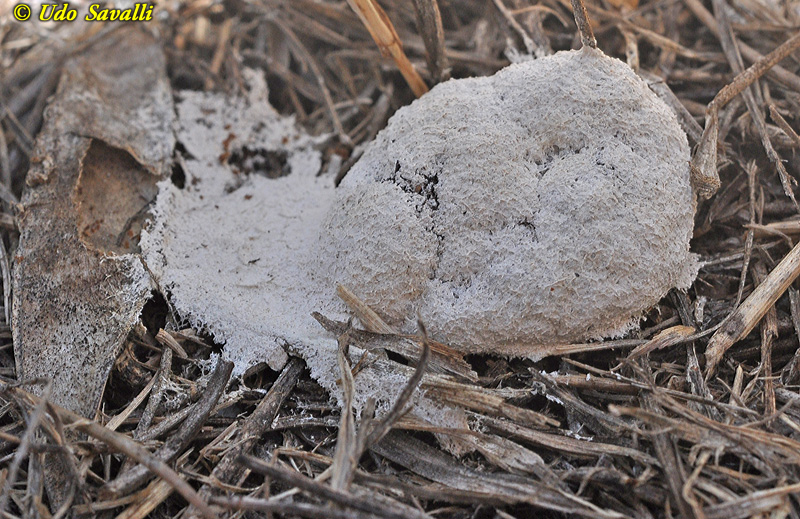
Dog-vomit Slime Mold, Fuligo septica aethalium (= fruiting body); AZ
|
|
Phylum Foraminifera
Characteristics
- External test (skeleton), usually of calcite (CaCO3)
- Tests usually a series of chambers of increasing size
- Tests have 1 or 2 holes through which pseudopods are extended
- Heterotrophic, but some have symbiotic algae
- Marine
|
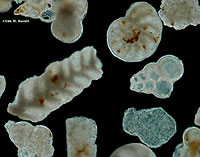
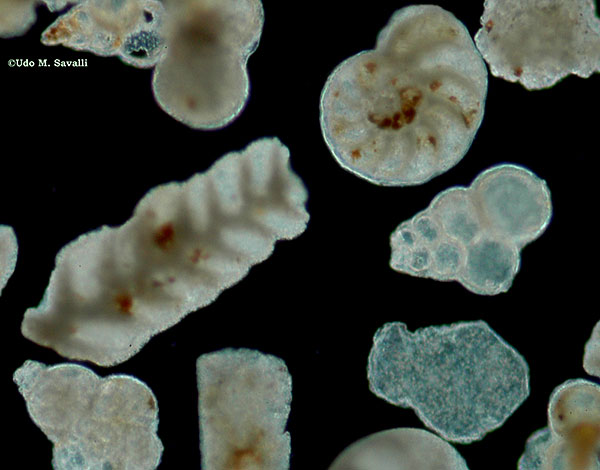
Foraminiferan "strew" (tests); 100x
|
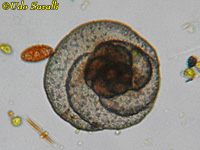
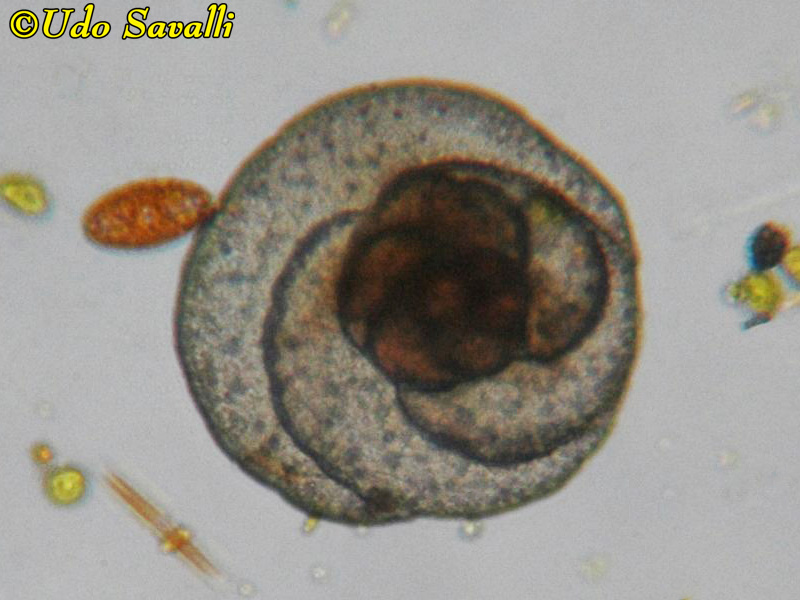
Live unidentified foraminiferan
|
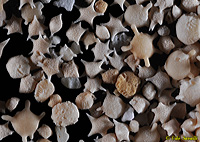
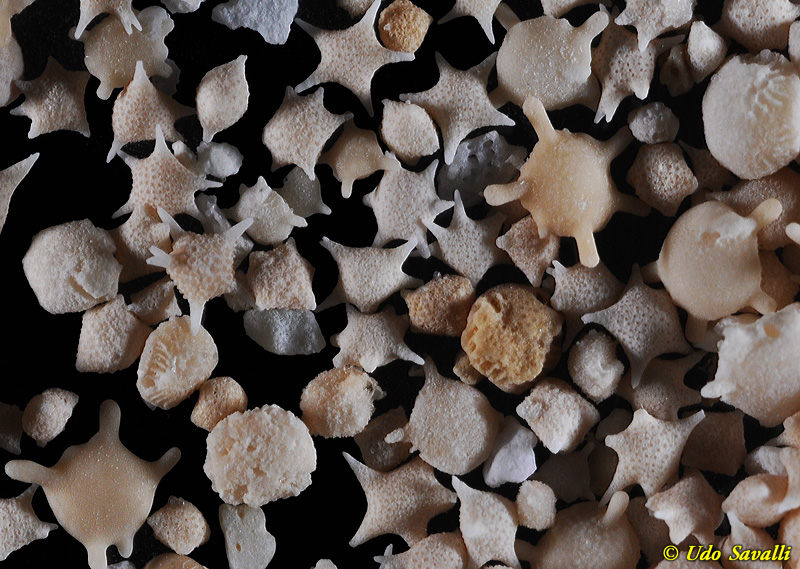
Tests of "Star Sand" Foraminifera, including Calcarina sp. (has club extensions) & Baculogypsina sphaerulata (star shaped); from Okinawa, Japan
|
|
Phylum Radiolaria
Characteristics
- Limited to no locomotion
- Internal siliceous skeleton; typically with elaborate structure
- Have axopods similar to Heliozoans, but these are not visible in dead tests
- Heterotrophic, but some have endosymbiotic dinoflagellates
- Marine waters only
|
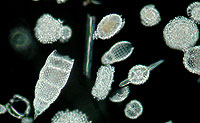
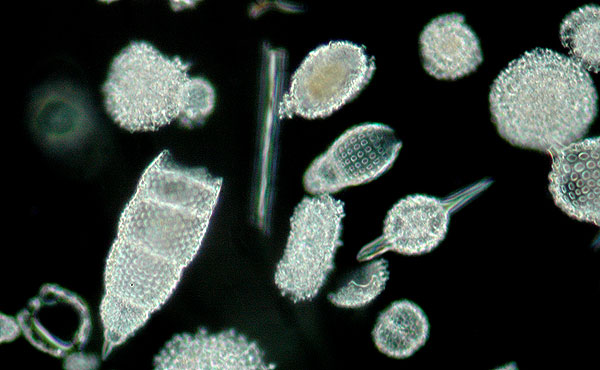
Radiolarian "strew" (tests); 100x
|
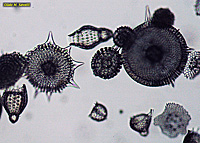
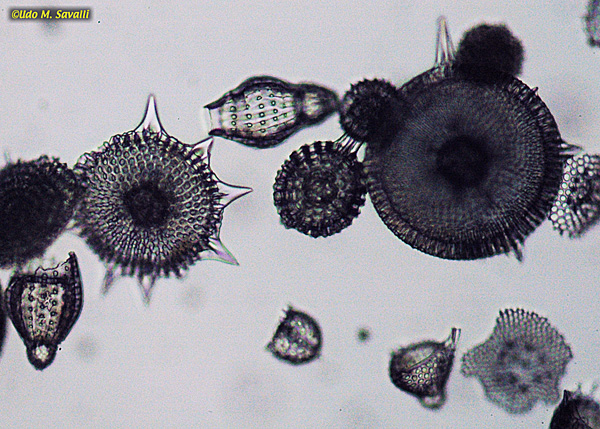
Radiolarian "strew" (tests); 100x
|
|
|