Mollusc Characteristics
- Coelom reduced
- Most viscera concentrated in dorsal visceral mass
- Body covered by thick mantle (epidermis) which forms a cavity
- Mantle secretes calcium carbonate shell (or spicules)
- Large ventral muscular foot
- Radula (band of teeth in esophagus)
- The Class Aplacophora will not covered in lab
|
|
Class Polyplacophora — Chitons
Characteristics
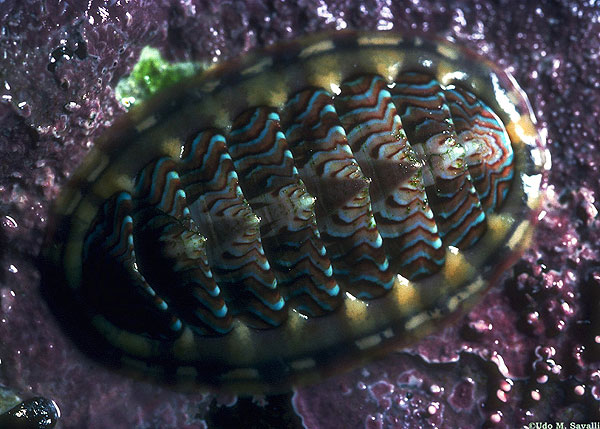
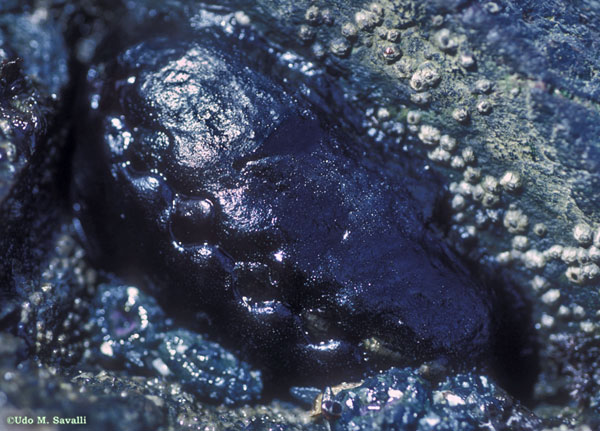
- Dorso-ventrally flattened and somewhat elongated
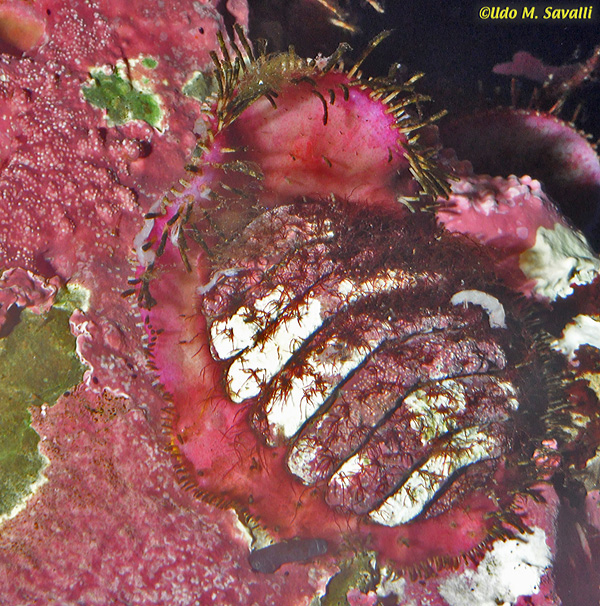
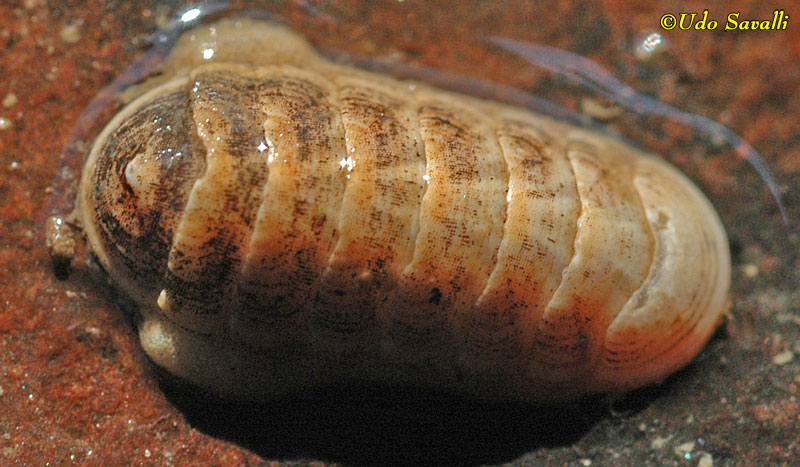
- 8 dorsal shell plates (valves)
- Mantle forms thick lateral girdle (and sometimes covers plates)
- Lack eyes, antennae
- Marine
|
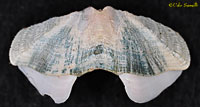
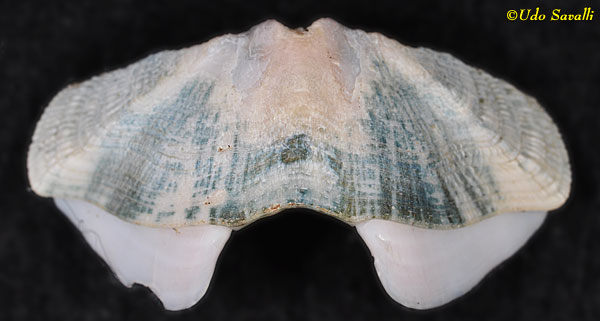
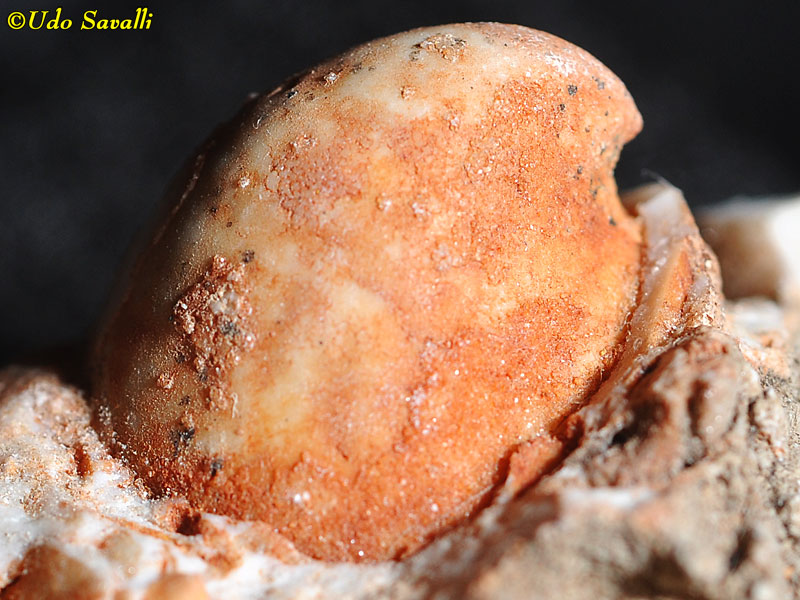
A single valve from the Conspicuous Chiton, Stenoplax conspicua
|
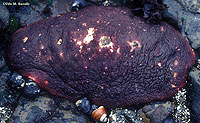
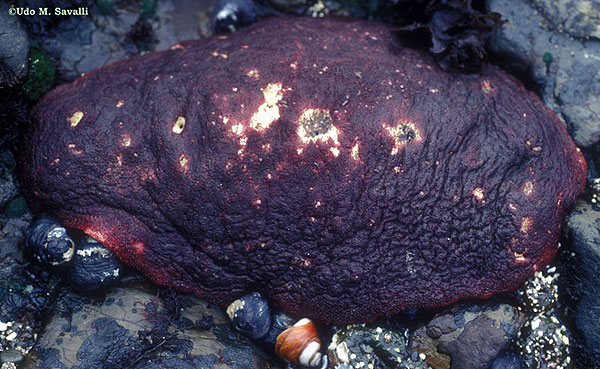
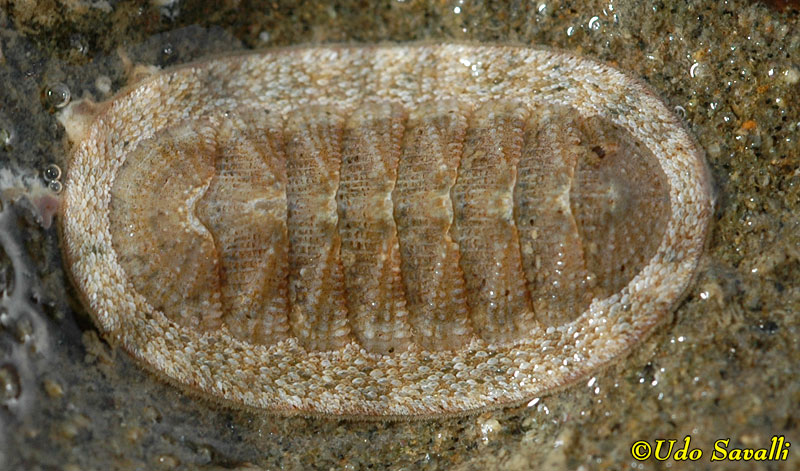
Dorsal view of gumboot chiton, Crytpochiton stelleri, the world's largest species (30 cm); CA
|
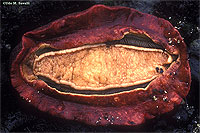
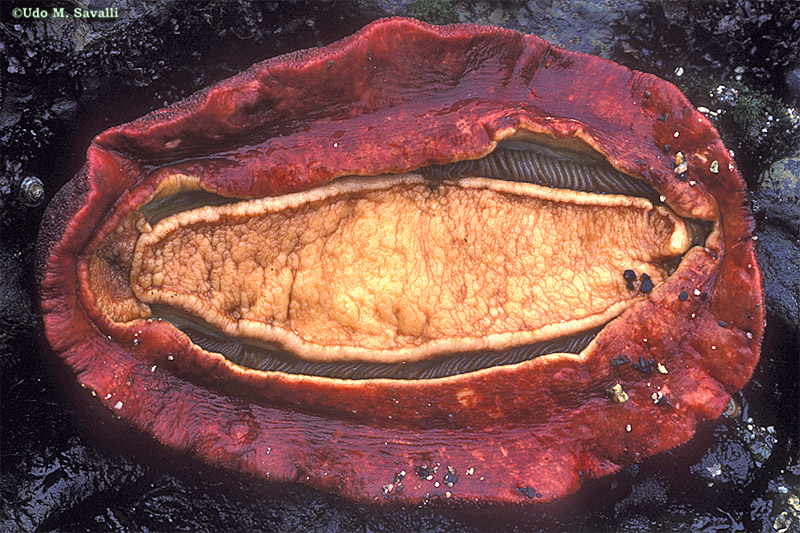
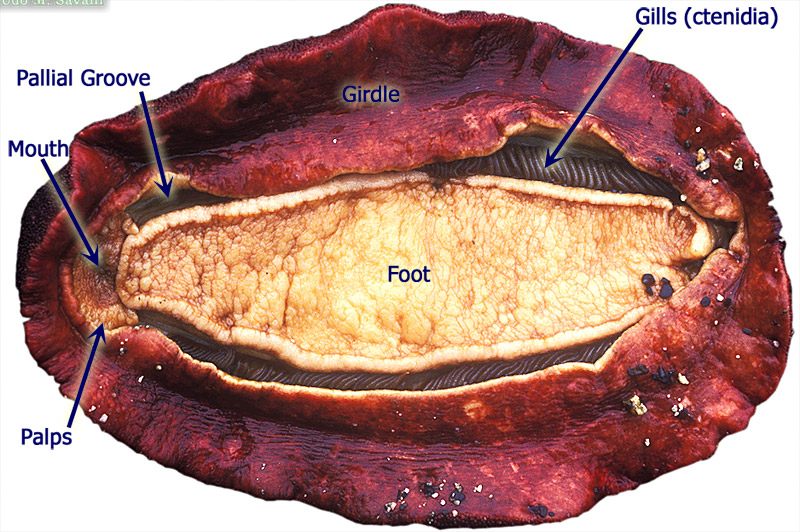
Ventral view of gumboot chiton; CA
See also labeled photo.
|
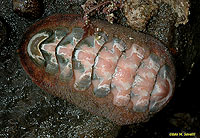
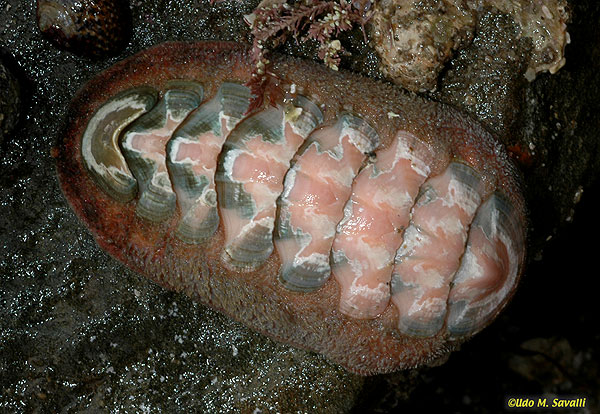
Conspicuous Chiton, Stenoplax conspicua, CA
|
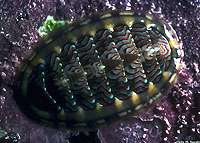
Lined Chiton, Tonicella lineata, CA
|
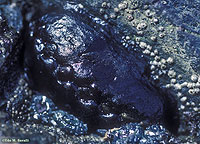
Black Chiton, Katharina tunicata, CA
|
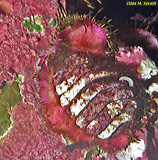
Veiled (Carnivorous) Chiton, Placiphorella velata
|
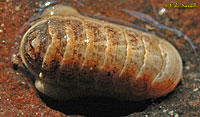
Dwarf Chiton, Leptochiton rugatus; CA
|
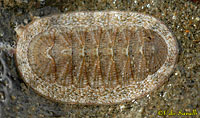
Scaled Chiton, Lepidozona pectinulata, CA
|
|
Class Monoplacophora — Monoplacophorans
Characteristics
- Single cone-shaped shell (superficially similar to limpets)
- Repeating organs, including paired, lateral ctenidia, nephridia, etc.
- Straight digestive tract (no visceral torsion)
- Rare (31 species) in deep-sea benthic marine environments
- Known first from fossils before living specimens were discovered
|
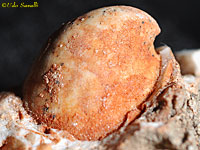
Fossil of Proplina sp.; Ordovician Period, Missouri
|
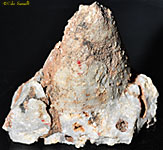
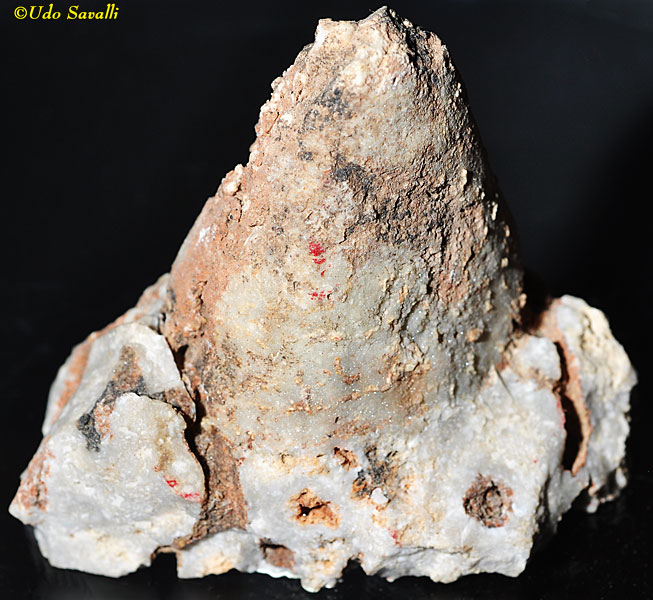
Fossil of Gasconadeoconus sp.; Ordovician Period, Missouri
|
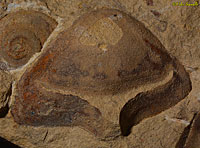
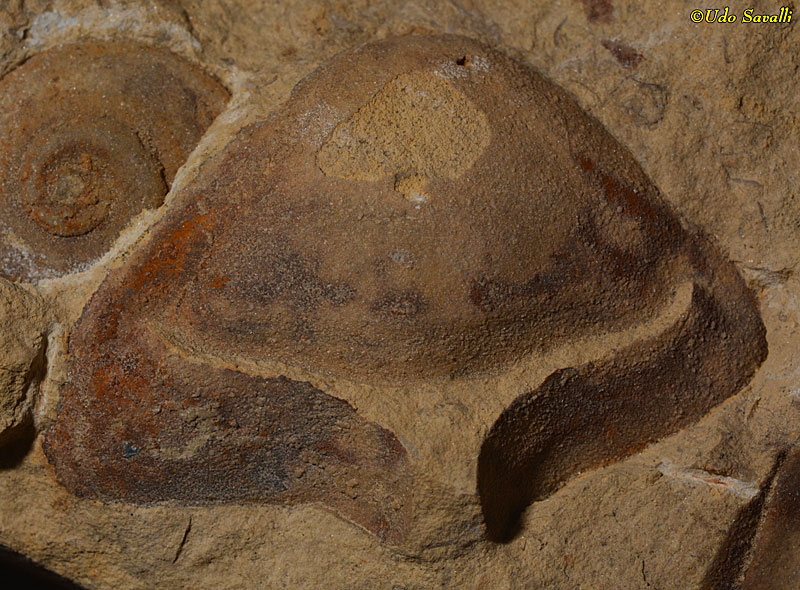
Pterotheca attenuata is a possible monoplacophoran; the two lower "wings" seen here are part of a second dorsal layer to the shell while most of the ventral layer is visible; Ordovician Period, Wisconsin
|
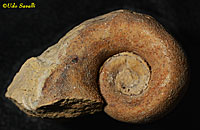
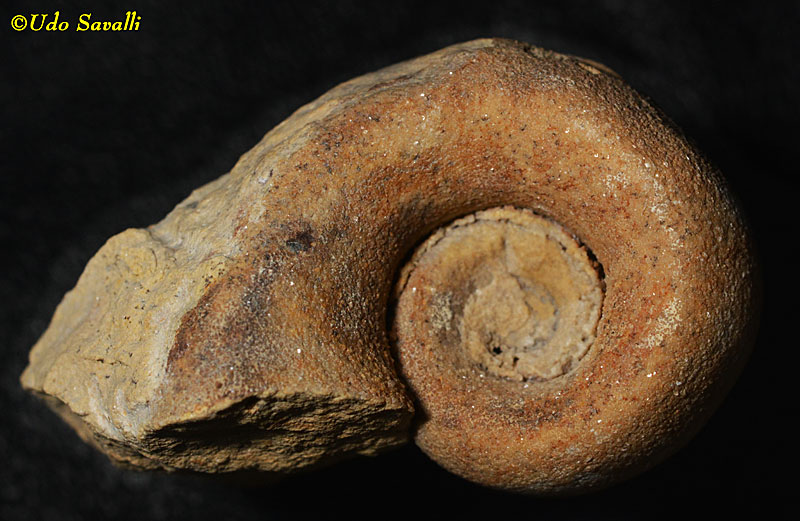
Many snail-like fossils, but with planispiral shells, such as this Salpingostoma buelli, are sometimes placed in the Monoplacophora, but this is highly debated; Ordovician Period, Wisconsin
|
|
Class Gastropoda — Snails & Slugs
Characteristics
- Coiled, asymmetric shell (lost in many)
- Visceral mass (gut, nervous system) becomes twisted 90-180° (reversed in some)
- Muscular, flattened, creeping foot
- Radula well-developed
- Head with eyes (may be reduced or lost) & tentacles
- Marine, freshwater, and terrestrial
|
|
|
|
Class Bivalvia — Clams, etc.
Characteristics
- Body and foot laterally compressed
- Shell with two hinged valves
- Reduced cephalization
- Edges of mantle usually fused to form siphons
- Radula lost
- Marine and freshwater; mostly filter-feeders
|
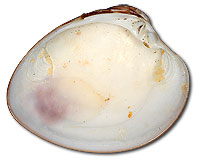
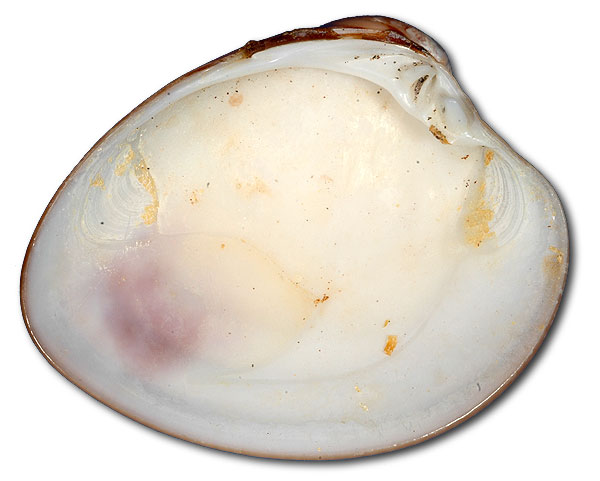
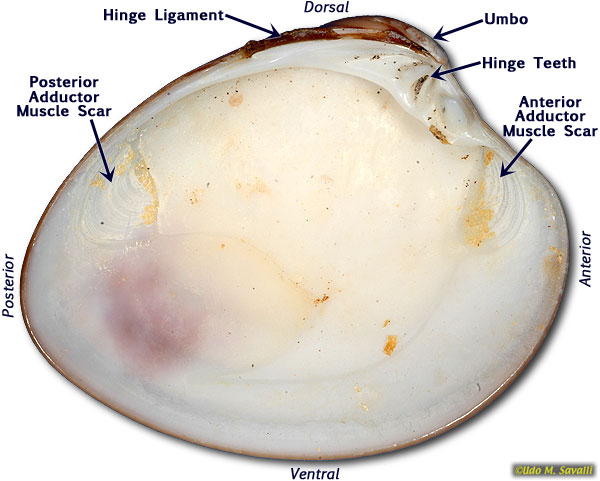
Left Valve of a Northern Quahog, Mercenaria mercenaria.
See also labeled photo.
|
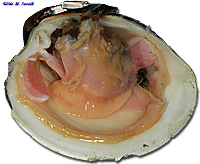
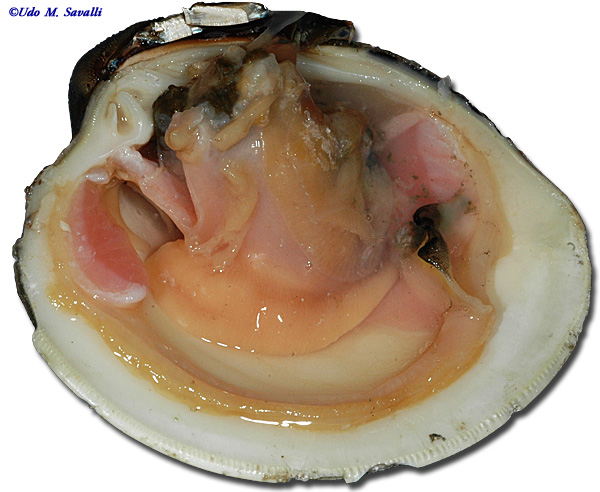
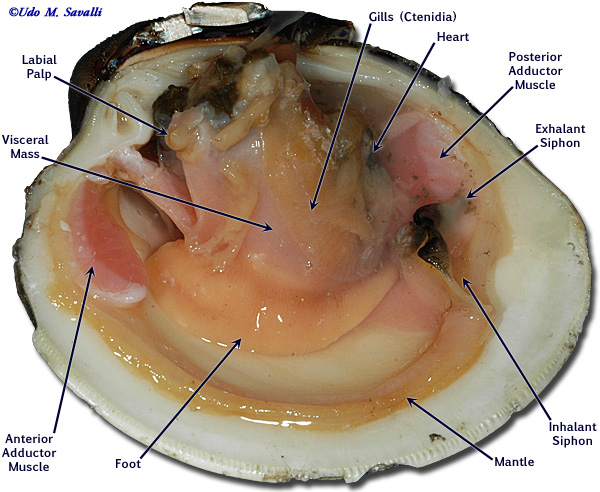
Anatomy of a Clam (in right valve).
See also labeled photo.
|
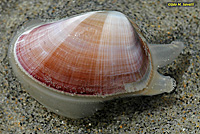
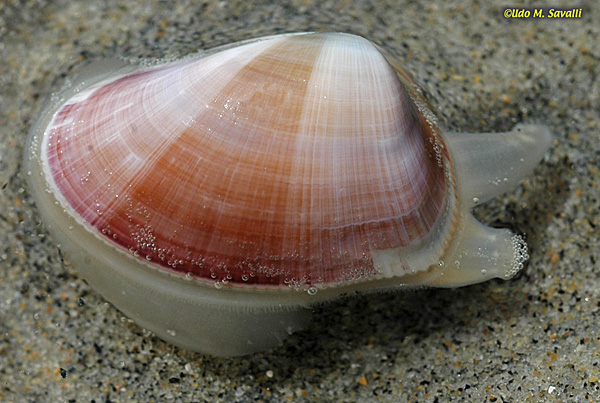
Bean Clam, Donax gouldii; note foot & siphons; LaJolla, CA
|
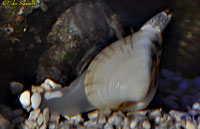
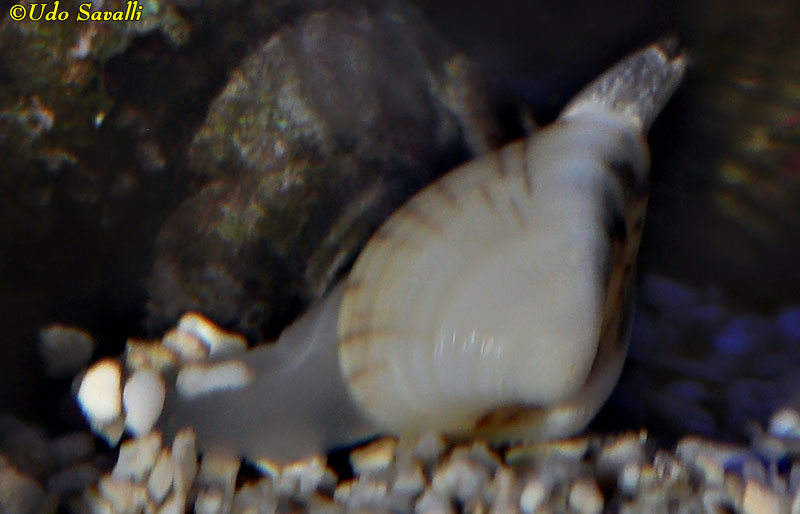
Pointed Venus, Anomalocardia flexuosa; note foot (lower left) & siphons (upper right)
|
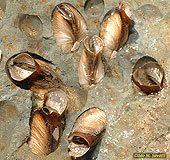
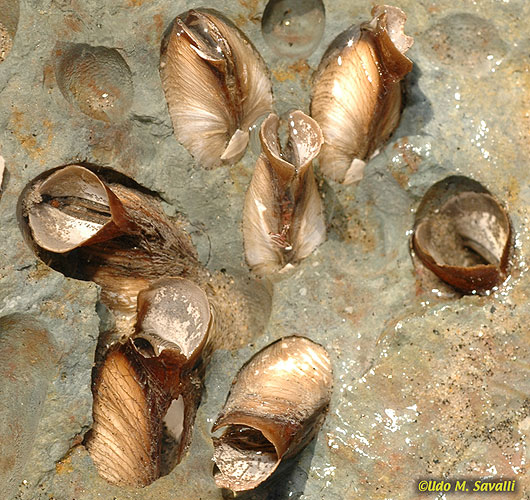
Flat-tipped Piddocks, Penitella penita, CA
|
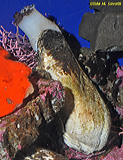
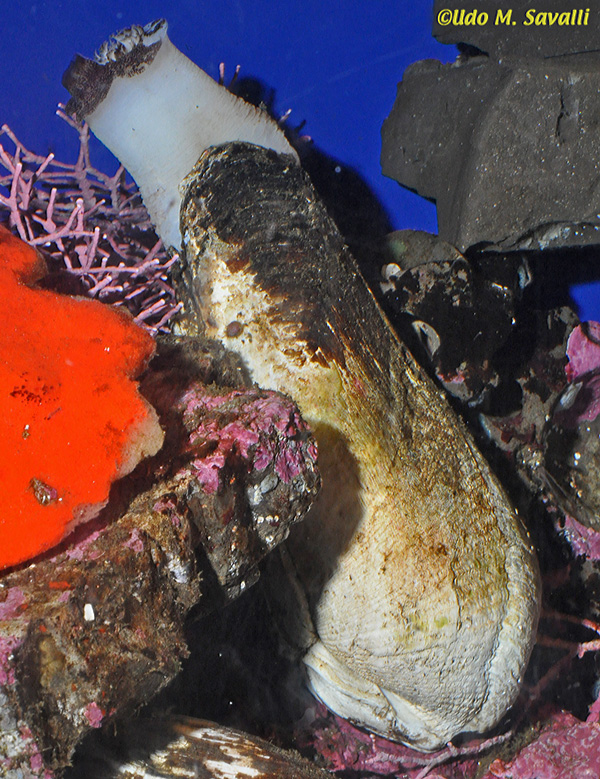
Scale-sided Piddock, Parapholas californica
|
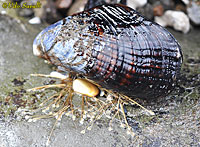
California Mussel, Mytilus californianus, showing byssal threads; CA
|
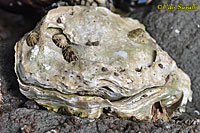
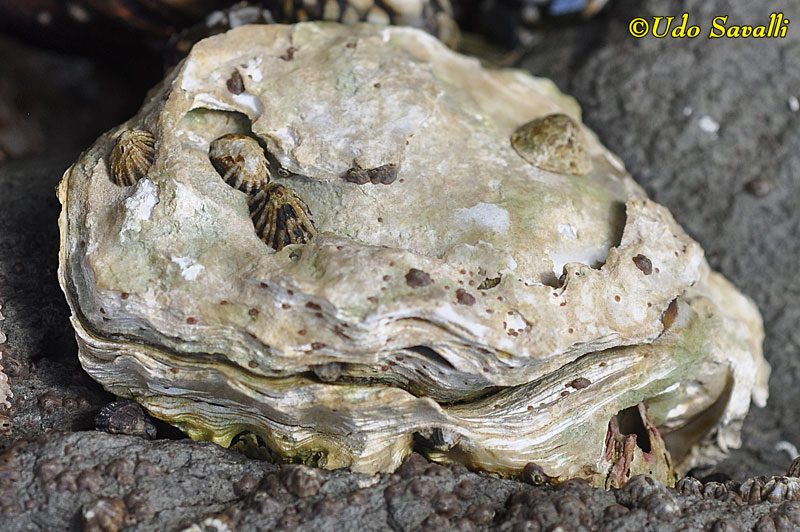
Olympia Oyster, Ostrea lurida; CA; oysters cement their shell directly to rocks and other hard substrates to become permanently attached
|
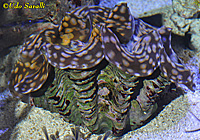
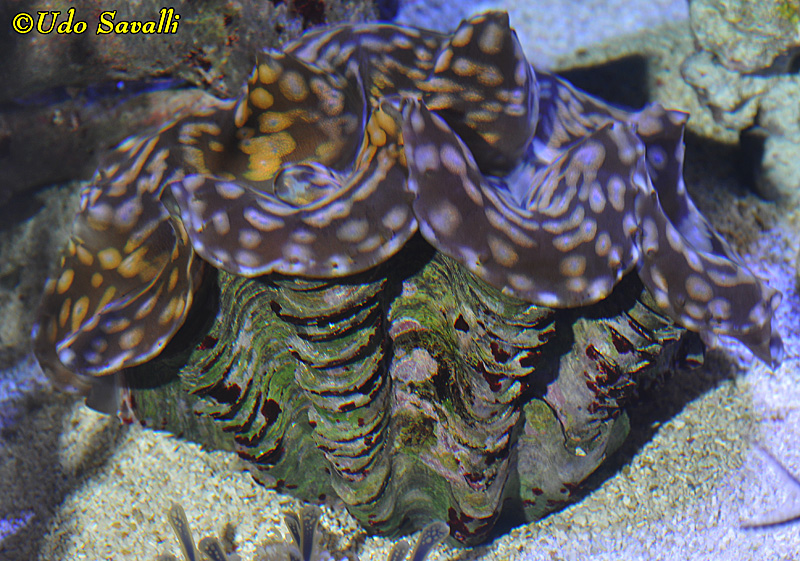
Fluted Giant Clam, Tridacna squamosa; relies on endosymbiotic algae in its mantle for nutrients
|
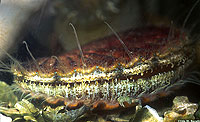
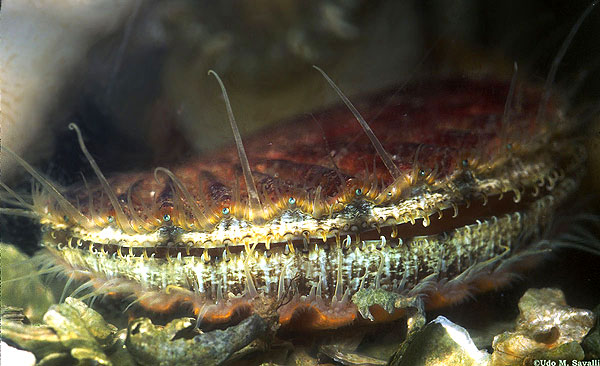
Swimming Scallop, Chlamys sp.
|
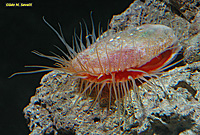
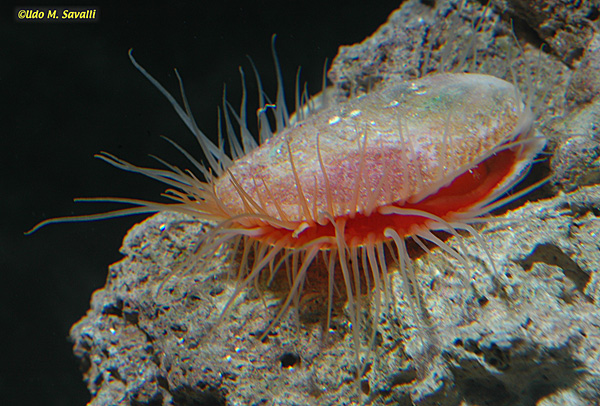
Flame Scallop, Lima scabra (not a true scallop)
|
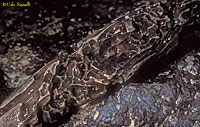
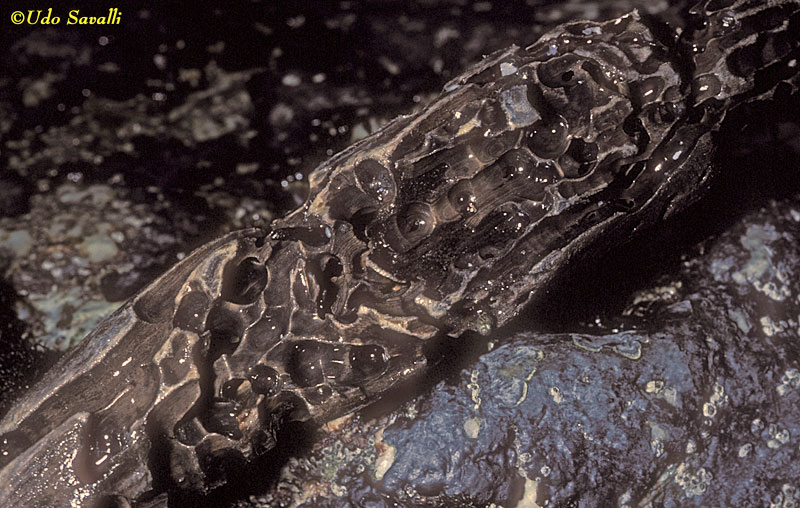
Driftwood with shipworm tunnels, probably Teredo sp.
|
|
Class Scaphopoda — Tusk Shells
Characteristics
- Single tubular, tapered shell
- Shell open at both ends
- Anterior adhesive tentacles
- Benthic marine environments
|
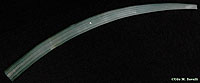
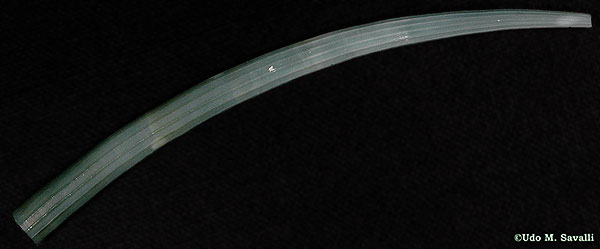
Green Tusk Shell, Dentalium aprinum; shell only
|
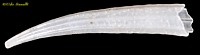
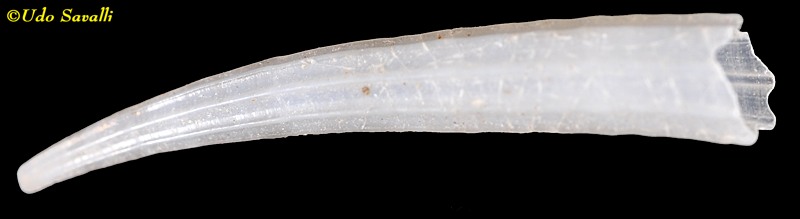
Tusk Shell, Dentalium sp.; shell only
|
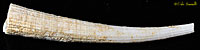
Fossil Tusk Shell, Fissidentalium mawsoni; Miocene, Neogene Period, Australia
|

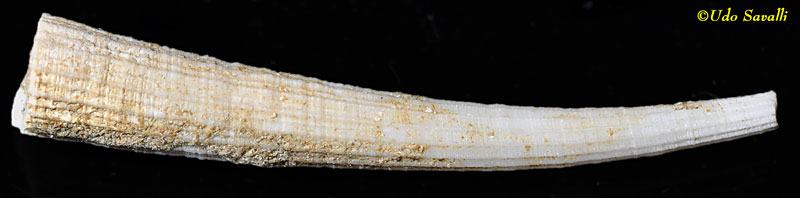
Tusk Shell, Calliodentalium crocinum; shell only
|
|
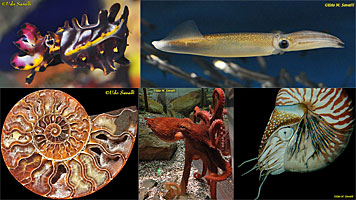
Class Cephalopoda — Squid, Octopus & Cuttlefish
Characteristics
- Shell chambered (if present), reduced, or absent
- Prehensile tentacles surround mouth
- Mouth with radula and beak
- Muscular siphon provides jet propulsion
- Well developed brain, eyes
- Closed circulatory system
- Marine
|
|
|
|
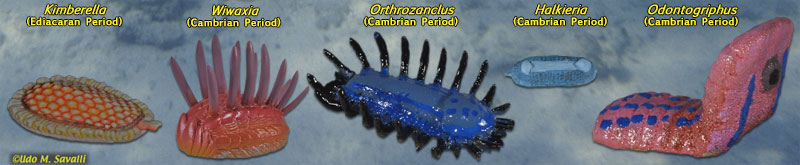
Stem Molluscs
Characteristics
- Mostly from Cambrian Period (but Kimberella from Ediacaran)
- Probably are outside the crown group (all extant molluscs)
- Identification typically based on radula-like feeding structure, but this is often controversial
- Some had plates and spines (but these features share some similarities with annelids and brachiopods)
|
|
|
|